Canada
Québec · Montréal · Toronto · the Arctic
French-speaking Québec’s chanson and fiddling, English-Canadian singer-songwriters, First Nations and Inuit voices — singing their own languages and landscapes next door to the United States.
34 recordings, 1930–2026
-

1930
La Bolduc, Chansons comiques de La Bolduc 1929–1939
A singer from the Gaspé. In the Depression she sang wryly in French about everyday life, known for her rhythmic mouth-music, turlutage — often called Québec’s first female singer-songwriter.
-

1953
The Quintet, Jazz at Massey Hall
Toronto’s Massey Hall, May 1953: the only time Charlie Parker, Dizzy Gillespie, Bud Powell, Max Roach and Charles Mingus played together — often called the summit of bebop.
-

1958
Oscar Peterson Trio, On the Town
Oscar Peterson’s trio with guitarist Herb Ellis and bassist Ray Brown, recorded live in July 1958 at the Town Tavern, a leading Toronto jazz club, and released on Verve. Ellis left the group soon afterwards.
-

1965
Oscar Peterson Trio, Canadiana Suite
Oscar Peterson’s trio with Ray Brown and Ed Thigpen recorded this suite in New York in September 1964: a portrait of the Canadian landscapes he crossed by train, from Toronto’s “Hogtown Blues” to the Saskatchewan prairie of “Wheatland.”
-

1967
Leonard Cohen, Songs of Leonard Cohen
The debut, at 33, of a Montréal poet and novelist: literary songs like “Suzanne,” spoken low.
-
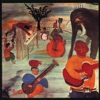
1968
The Band, Music from Big Pink
The debut of a band with four Canadians among its five members; born of their time with Bob Dylan, it includes “The Weight.”
-

1968
Robert Charlebois & Louise Forestier, Robert Charlebois & Louise Forestier
Charlebois and Louise Forestier’s joint album, widely known as “Lindberg” after its hit, was cut in a single night at André Perry’s studio in Brossard. Its rock sung in Québec joual, profanities and all, shocked the province; the same artists staged the revue L’Osstidcho that year.
-
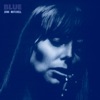
1971
Joni Mitchell, Blue
From Alberta. Her own open tunings and unguarded words make it one of the summits of the singer-songwriter era.
-
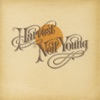
1972
Neil Young, Harvest
Born in Toronto. Country-tinged folk rock that included the hit “Heart of Gold.”
-

1975
Harmonium, Si on avait besoin d’une cinquième saison
A Montréal group: French-language songs built into suites around the seasons, with acoustic guitars and woodwinds.
-

1976
Kate & Anna McGarrigle, Kate & Anna McGarrigle
The debut by Canadian sisters Kate and Anna McGarrigle, co-produced by Joe Boyd, includes their own take on Anna’s “Heart Like a Wheel,” already the title track of a Linda Ronstadt album. Melody Maker named it album of the year for 1976.
-

1977
Stan Rogers, Fogarty's Cove
Stan Rogers’ debut, produced by Paul Mills and recorded in just two days in September 1976 at Springfield Sound in Ontario. It includes “Barrett’s Privateers,” his epic ballad of a doomed privateer crew.
-

1988
Cowboy Junkies, The Trinity Session
Short of money, Cowboy Junkies recorded this in one day, 27 November 1987, gathered around a single ambisonic microphone in Toronto’s Church of the Holy Trinity. The hushed, church-reverb sound earned it the Los Angeles Times’ album of the year.
-

1989
La Bottine Souriante, Je voudrais changer d’chapeau
A Québécois trad group: fiddle, accordion and foot-tapping rhythms — later with horns — bringing rural dance music into the present.
-

1989
Kashtin, Kashtin
The debut by Kashtin, the Innu duo of Florent Vollant and Claude McKenzie, whose name means “tornado” in Innu-aimun. Sung in Innu-aimun, it sold more than 200,000 copies worldwide and won Félix awards for best debut and best country-folk album in 1990.
-

1992
The Tragically Hip, Fully Completely
The Tragically Hip put Canadiana front and centre here, from Bill Barilko in “Fifty Mission Cap” to David Milgaard in “Wheat Kings.” It sold 200,000 copies in its first two weeks, became their first Canadian No. 1 and went diamond with over a million sold.
-

1995
Ashley MacIsaac, Hi, How Are You Today?
Cape Breton fiddler Ashley MacIsaac’s breakthrough set traditional Cape Breton fiddling to rock and dance beats; “Sleepy Maggie,” with Mary Jane Lamond singing in Gaelic, became a Canadian hit. It won the 1996 Juno for roots & traditional album.
-

2002
Broken Social Scene, You Forgot It In People
Broken Social Scene’s second album, produced by David Newfeld for local label Arts & Crafts. Its first pressings sold out quickly, forcing a 2003 reissue, and it became both the band’s breakthrough and an emblem of the Toronto indie scene.
-

2002
Les Cowboys Fringants, Break syndical
The fourth album by Québec band Les Cowboys Fringants, released on La Tribu. Its single “Toune d’automne” was their first big hit, and the record brought them critical recognition and a much wider audience.
-

2004
Arcade Fire, Funeral
A Montréal band whose members had recently lost family; its mix of euphoria and grief became a defining indie record of the 2000s.
-

2010
Arcade Fire, The Suburbs
The Montreal band’s third album, about growing up in the suburbs; it won the Grammy for Album of the Year.
-

2010
Karkwa, Les chemins de verre
The Montreal band’s album was the first French-language winner of the Polaris Music Prize.
-

2011
The Weeknd, House of Balloons
The Weeknd gave this mixtape away free in March 2011 on his own XO label; produced mainly by him with Doc McKinney and Illangelo in Toronto studios, it was commercially released by Republic in 2012 as the first disc of Trilogy.
-

2014
Tanya Tagaq, Animism
From Nunavut. She developed Inuit throat singing — traditionally a duet between two women — into a solo, improvised art; this won Canada’s Polaris Prize.
-

2016
Lido Pimienta, La Papessa
The Toronto-based Colombian singer, of Afro-Colombian and Wayuu heritage, won the Polaris Prize with this album sung in Spanish.
-

2016
KAYTRANADA, 99.9%
The debut by Haitian-born, Montreal-raised producer Kaytranada, released on XL with guests including Anderson .Paak, Syd and BadBadNotGood. It won the 2016 Polaris Music Prize and the 2017 Juno for electronic album.
-

2016
The Halluci Nation, We Are the Halluci Nation
The third album by Ottawa’s A Tribe Called Red (now The Halluci Nation). Its title and opening track come from words the late John Trudell wrote for the group; powwow song meets electronic beats, with guests including Tanya Tagaq and Yasiin Bey.
-

2018
Jeremy Dutcher, Wolastoqiyik Lintuwakonawa
A Wolastoqey (Maliseet) singer from New Brunswick sings with century-old wax-cylinder recordings of his ancestors, in a language with few speakers left.
-

2021
Cadence Weapon, Parallel World
Edmonton-raised rapper Cadence Weapon, based in Toronto since 2015, grapples here with gentrification, technology and history, and was credited with capturing a Toronto view of the Black experience in Canada. It won the 2021 Polaris Music Prize, after two earlier shortlistings.
-

2022
Pierre Kwenders, José Louis and the Paradox of Love
Kinshasa-born, Montreal-raised, singing in Lingala, French and English, joining Congolese rumba to electronics.
-

2022
Snotty Nose Rez Kids, I'M GOOD, HBU?
The fifth album by Snotty Nose Rez Kids, Haisla rappers Young D and Yung Trybez from Kitamaat Village, British Columbia — a more celebratory record than its predecessor. It was shortlisted for the 2023 Polaris Music Prize, and the video for “Damn Right” won the Prism Prize.
-

2025
Yves Jarvis, All Cylinders
Montreal-based Yves Jarvis made this album alone in rented apartments in Montreal and Los Angeles, playing all eleven songs himself and recording on bare-bones Audacity on his laptop. It won the 2025 Polaris Music Prize.
-

2026
Tanya Tagaq, Saputjiji
Tanya Tagaq’s follow-up to her 2022 album Tongues, released by Six Shooter in March 2026 and produced by Sumach and Jean Martin: a protest record aimed at billionaires, genocide and colonial systems, opening with the throat-sung “Fuck War”. It made the 2026 Polaris Music Prize short list.
-

2026
Drake, ICEMAN
Drake’s ninth studio album, released by OVO Sound and Republic in May 2026 alongside two surprise albums, Maid of Honour and Habibti. It topped the Billboard 200, its single “What Did I Miss?” reached No. 2 on the Hot 100, and Complex ranked it first among 2026’s albums at mid-year.