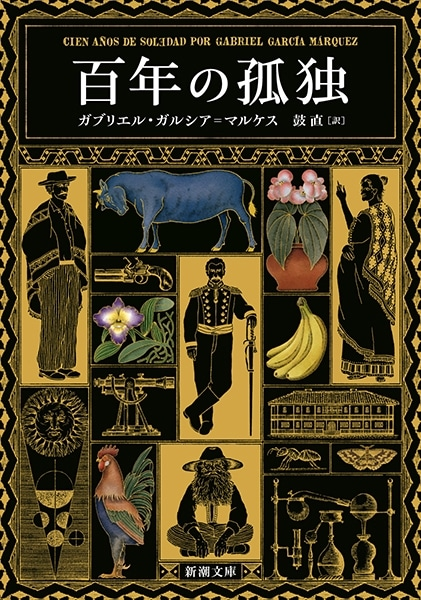
作品について
著者:ガブリエル・ガルシア=マルケス/原題:Cien años de soledad/初版刊行:1967年5月30日(アルゼンチン・ブエノスアイレス、スダメリカーナ社)/日本語版:1972年(鼓直訳、新潮社)/受賞:1982年 ノーベル文学賞/発行部数:5,000万部以上/翻訳言語数:46以上の言語
著者ガブリエル・ガルシア=マルケスは1928年3月6日、コロンビアの小さな町アラカタカに生まれた。幼少期を祖父母のもとで過ごし、祖母の語り口が後の作風に大きな影響を与えたとされる。ジャーナリストとしてキャリアを始め、1965年頃から本作の執筆に専念。1966年8月に脱稿した際、多額の借金を抱えていたと伝えられる。1982年、本作を中心とした業績によりノーベル文学賞を受賞。1960〜70年代の「ラテンアメリカ文学ブーム」を象徴する一冊とされている。
マコンドの時代区分(原作全20章との対応)
マコンド建設期(推定0〜17年・第1〜2章)
湿地を越えて辿り着いた一団が村を築く。まだ地図にも載らない、隔絶されたユートピア。
接触・発展期(推定17〜34年・第3〜4章)
町長モスコテ、商人ピエトロ・クレスピ、司祭ニカノールら外部の人間が相次いで訪れ、行政・貿易・信仰がもたらされる。
内戦期(推定34〜50年・第5〜9章)
アウレリャノ大佐が自由派として蜂起。三十二回の武装闘争と、庶子たちの悲劇が続く。史実の千日戦争(1899–1902)を思わせる。
拡張と静穏(推定50〜58年・第10〜11章)
戦後の再建期。家の中に新しい世代が生まれ育つ。
バナナ景気(推定58〜73年・第12〜14章)
鉄道が敷かれ、米系バナナ会社の進出で町は好景気に沸く。
虐殺事件(推定73〜77年・第15章)
バナナ会社労働者と米国資本家の対立。闇に葬られた大虐殺。
4年11ヶ月と2日の雨(推定77〜81年・第16〜17章)
寓話的な大雨が降り続き、町の衰退が加速する。
衰退と終焉(推定81〜100年・第18〜20章)
家は外界から閉ざされ、静かに朽ちていく。予言が成就する。
ブエンディア家 家系図・登場人物一覧
ホセ・アルカディオ・ブエンディア
族長・マコンドの創設者(発明狂の初代族長) ・ 推定0〜50年目
錬金術と発明に取り憑かれた族長。氷や磁石、望遠鏡といった外の世界の技術に夢中になり、やがて理性の境界を越えて庭の栗の木に繋がれたまま生涯を終える。死去した際には、マコンドの町に空から小さな黄色い花が雨のように降り注いだ。
ウルスラ・イグアラン
家母長(百年を生きる家長) ・ 推定0〜92年目
一族最長寿の人物で、物語の大半を通じて家の実質的な支柱であり続ける。近親婚を恐れ続けた彼女の予感は、最終世代で現実のものとなる。
レベーカ
養女(血縁によらない)(土を食む養女) ・ 推定17〜82年目
両親の遺骨の入った袋を抱えて村に現れた孤児。不眠症の疫病や土を食べる奇癖を持ち込んだとされる。晩年は屋敷にこもり長い余生を送る。
ホセ・アルカディオ
長男(怪力の放浪者) ・ 推定2〜34年目
怪力と放浪癖を持ち、ジプシーの一団と共に村を出奔。数年後、巨漢となって帰郷し、養女として育ったレベーカと結婚して周囲を驚かせる。晩年は謎の死を遂げる。
ピラル・テルネラ
占い師・二人の息子の母(占うカードの女) ・ 推定0〜97年目
マコンドを開いた最初の入植者の一人。困難な過去から引き離すため両親に連れられてこの地へやってきた。以来、カードで一族の運命を占い続ける女性となる。ホセ・アルカディオとアウレリャノ大佐、それぞれとの間に子をもうけるが、正式な婚姻には至らない。驚異的な長命を保つ。
アウレリャノ・ブエンディア大佐
自由派の反乱軍指導者(三十二の蜂起) ・ 推定10〜71年目
32回の武装蜂起を起こし、いずれも敗れながら生き延びる、一族で最も伝説的な人物。晩年は戦争から身を退き、工房で金の小魚を作っては溶かすことを繰り返す。
レメディオス・モスコテ
アウレリャノ大佐の最初の妻(早逝した幼な妻) ・ 推定19〜34年目
マコンドの町長モスコテ氏の末娘。少女のうちにアウレリャノと婚約し、初潮を迎えてまもなく結婚する。家族に愛されるが、双子を身ごもったまま原因不明の病で急逝する。
アマランタ
末娘(愛を拒んだ末娘) ・ 推定16〜56年目
生涯独身を貫き、嫉妬と後悔を抱えたまま、自らの死装束を編み続けて一生を終える。愛を拒み続けたことが一族の孤独という主題を強く体現する。
アルカディオ
臨時統治者・独裁者(残虐な独裁者) ・ 推定24〜42年目
戦時中にマコンドの臨時統治を任されると、たちまち残虐な独裁者と化す。実の母親と知らずにピラル・テルネラに好意を寄せるが、近親相姦を避けるためピラルが身代わりとしてサンタ・ソフィアを送り込んだ。最期は敵軍に捕らえられ、銃殺刑に処される。双子が生まれるのはその後のことだった。
サンタ・ソフィア・デ・ラ・ピエダ
外部から嫁いだ女性(寡黙な母) ・ 推定20〜93年目
アルカディオの事実上の妻となり、家事を黙々とこなし続ける。晩年、誰にも告げずに静かに家を去る。
十七人のアウレリャノ
大佐が各地に残した非嫡出の息子たち(灰の十字、暗殺) ・ 推定38〜70年目
アウレリャノ大佐が戦時中に各地の女性との間に設けた庶子たち。洗礼の日、額に灰の十字を刻まれて一族に認知される。のちに一人を除く全員が何者かに次々と暗殺され、大佐に暗い影を落とす。
アウレリャノ・ホセ
軍人(叶わぬ初恋) ・ 推定39〜56年目
叔母アマランタに叶わぬ恋心を抱いたまま軍務につき、若くして戦死する。
レメディオス(小町娘)
アルカディオとサンタ・ソフィアの娘(昇天した美女) ・ 推定40〜61年目
天真爛漫、自由奔放な美女。浮世離れした美しさで男たちを次々に死に至らしめるが、本人には俗世の欲がまったくない。ある日、洗濯物のシーツに包まれながら唐突に昇天。
ホセ・アルカディオ・セグンド
労働争議の指導者(双子の一方)(虐殺の生き証人) ・ 推定42〜87年目
バナナ農園の労働者ストライキを組織し、軍による大虐殺事件の唯一の生存者・目撃者となる。誰にも信じてもらえないまま、晩年はメルキアデスの羊皮紙の解読に没頭する。双子の弟アウレリャノ・セグンドと同じ日に世を去る。
アウレリャノ・セグンド
享楽家(双子の一方)(宴を続ける快楽家) ・ 推定42〜87年目
バナナ景気に乗じて豪奢な宴を開き続ける快楽主義者。正妻フェルナンダとの家庭と、愛人ペトラ・コテスとの奔放な生活を両立させる。双子の兄ホセ・アルカディオ・セグンドと同じ日に世を去る。
フェルナンダ・デル・カルピオ
外部から嫁いだ女性(厳格な外来者) ・ 推定46〜92年目
没落貴族の出身。厳格な貴族的規律をブエンディア家に持ち込む。マコンドの外の価値観を最後まで曲げず、家の衰退期を支配し続ける。
ホセ・アルカディオ(二世)
アウレリャノ・セグンドとフェルナンダの息子(還俗した神学生) ・ 推定68〜89年目
母の意向でローマの神学校へ送られるが、聖職に就くことなく帰郷。最期は自宅の浴室で命を落とす。
レナータ・レメディオス「メメ」
アウレリャノ・セグンドとフェルナンダの娘(引き裂かれた恋) ・ 推定70〜91年目
整備工マウリシオ・バビロニアと恋に落ちるが、厳格な母フェルナンダに引き離され、身ごもったまま修道院へ送られる。
マウリシオ・バビロニア
整備工(外部)(撃たれた恋人) ・ 推定66〜95年目
彼の周りにはいつも黄色い蝶が舞い、メメは姿が見えなくてもその蝶で彼の存在を感じ取った。メメと恋に落ちるが、鶏泥棒と誤解されて撃たれ、以後長く体が不自由なまま生きる。
アマランタ・ウルスラ
アウレリャノ・セグンドとフェルナンダの末娘(帰郷した末娘) ・ 推定71〜100年目
ブリュッセルへ留学し、近代的な感性を身につけて帰郷。荒廃した家を建て直そうとするが、甥と知らずにアウレリャノ(バビロニア)と恋に落ちる。
ガストン
アマランタ・ウルスラの夫・飛行家(戻らなかった飛行家) ・ 推定56〜94年目
裕福なベルギー人の飛行家。ブリュッセルの修道院学校の上空を自らの複葉機で飛んだことがきっかけでアマランタ・ウルスラと出会い、結婚する。「絹の紐で引かれるように」マコンドへ連れてこられるが、航空郵便事業を始めようと注文した飛行機がアフリカの一部族のもとへ誤って送られてしまう。それを追ってベルギーへ戻ったまま、二度とマコンドへは帰らなかった。
アウレリャノ(バビロニア)
メメとマウリシオの子(羊皮紙を読む子) ・ 推定73〜100年目
出自を隠されたまま家の奥で育てられ、書物と羊皮紙にのめり込む。血縁と知らぬまま伯母アマランタ・ウルスラと惹かれ合う。
最後のアウレリャノ
アウレリャノ(バビロニア)とアマランタ・ウルスラの子(豚の尾を持つ子) ・ 推定99〜100年目
一族で唯一、愛によって生まれた子でありながら、近親の血ゆえに豚の尻尾を持って生まれる。母を失った直後、蟻の群れに運び去られ、一族の血統はここで途絶える。
メルキアデス
ジプシーの賢者・預言者(予言を記す賢者) ・ 推定2〜98年目
見世物とともに毎年マコンドを訪れるジプシーの長老。磁石や望遠鏡、氷など外界の驚異をもたらし、ホセ・アルカディオ・ブエンディアと親交を結ぶ。いったん死んだと伝えられるものの、死の孤独に耐えられずマコンドへ戻ってくる。その後、川で溺死しマコンドで最初に埋葬されるが、死後もたびたび姿を現す。彼がサンスクリット語で綴った羊皮紙の予言は、一族最後の世代によってようやく解読される。
ヘリネルド・マルケス大佐
アウレリャノの盟友・革命家(報われぬ盟友) ・ 推定11〜68年目
アウレリャノ大佐とともに三十二回の蜂起を戦った盟友。マコンドの軍政を任されるが、和平協定をめぐりアウレリャノ自身に処刑を命じられかける。長年アマランタに求婚し続けるも、最後まで拒まれ続ける。
アポリナル・モスコテ
マコンド初代町長(外から来た統治者) ・ 推定17〜55年目
政府から派遣された初代の町長(コレヒドール)。家々を青く塗るよう命じるなど新たな秩序を持ち込み、族長ホセ・アルカディオ・ブエンディアと対立する。のちに融和し、末娘レメディオスをアウレリャノに嫁がせる。
ニカノール・レイナ神父
マコンド初代の司祭(空中浮揚した神父) ・ 推定35〜41年目
教会を建てる資金を集めるため、マコンドに神の実在を示そうとホットチョコレートを飲んで宙に浮いてみせる。町に信仰を持ち込み、アウレリャノ大佐とレメディオスの結婚式を執り行う。肝臓熱に衰弱し、後任のコロネル神父にその座を譲った。
ピエトロ・クレスピ
ピアノ商人・音楽教師(報われぬ求婚者) ・ 推定24〜40年目
自動演奏ピアノを届けにマコンドを訪れたイタリア人。舞踏教師として滞在し、レベーカと婚約するも、帰郷した長男ホセ・アルカディオに彼女を奪われる。その後アマランタに求婚を続けるが幾度となく拒まれ、絶望のうちに自ら命を絶つ。
プルデンシオ・アギラール(死者)
決闘で命を落とした男(一族を追う亡霊) ・ 推定32〜50年目
マコンド建設以前、闘鶏の恥辱をめぐる決闘でホセ・アルカディオ・ブエンディアに槍で刺し殺される。その亡霊に悩まされたことが、一族が村を捨てて新天地を目指す直接のきっかけとなった。マコンドで最初の死者となったメルキアデスの死をきっかけに亡霊となって再び姿を現し、正気を失っていくホセ・アルカディオ・ブエンディアの数少ない話し相手になる。
ペトラ・コテス
アウレリャノ・セグンドの愛人(家畜を殖やす愛人) ・ 推定44〜95年目
アウレリャノ・セグンドの愛人。二人が愛し合うたびに家畜が異常な速さで殖え、バナナ景気の富そのものを象徴する存在となる。正妻フェルナンダとの二重生活の末、彼の死後も変わらず家に食料を届け続ける。
ビシタシオン
マコンドへ逃れてきたインディオの召使い(不眠症を持ち込んだ女) ・ 推定15〜43年目
故郷の不眠症の疫病から逃れ、弟カタウレと共にマコンドへたどり着き、ブエンディア家の召使いとなる。皮肉にも、レベーカを通じて自らが逃れてきた疫病をマコンドにもたらしてしまう。晩年、ベッドの下に金貨の山を残して静かに世を去った。
ホセ・ラケル・モンカダ将軍
保守派の将軍・マコンド市長(友を処刑した代償) ・ 推定40〜49年目
保守派の将軍でありながら、敵であるはずのアウレリャノ大佐と深い友情を育む。戦後はマコンドの民政知事となり「マコンド史上最高の政治」と評される統治を行うが、新たな戦端が開かれると捕虜となり、旧友アウレリャノの命令により銃殺される。ウルスラたちの嘆願も届かなかった。
カタルーニャの賢人
書店主・元古典文学教授(故郷を想う老賢人) ・ 推定95〜97年目
マコンドで書店を営む博識な老人。アウレリャノ(バビロニア)が羊皮紙解読に必要なサンスクリット語の教本を、無償で譲り渡す。故郷カタルーニャへの尽きせぬ郷愁を語り、マコンドを去るようアウレリャノに勧めるが、聞き入れられることはなかった。
ガブリエル・マルケス
アウレリャノ(バビロニア)の親友(作者と同じ名を持つ青年) ・ 推定95〜99年目
カタルーニャの書店主が引き合わせた四人の学生仲間の一人で、アウレリャノ(バビロニア)の最も親しい友人となる。ヘリネルド・マルケス大佐の玄孫にあたる。最終的にマコンドを去っていく。
ニグロマンタ
アウレリャノ(バビロニア)の恋人(最後まで寄り添った女) ・ 推定95〜100年目
アウレリャノ(バビロニア)が心通わせる女性。彼がアマランタ・ウルスラへの叶わぬ想いを抱える間もそばにいた。物語の最後、彼女を失った直後のアウレリャノを酔いつぶれたところから救い出し、彼が背負っていた「借り」をすべて帳消しにする。
コロネル神父(愛称:仔犬)
マコンド2代目の司祭(千日戦争の元兵士) ・ 推定41〜58年目
肝臓熱で衰弱したニカノール神父の後任として着任した、千日戦争の退役軍人。「仔犬(エル・カチョーロ)」と呼ばれ親しまれた。同じ著者の別作品『落葉』にも登場する人物である。
アントニオ・イサベル神父
マコンド3代目の司祭(闘鶏を愛した神父) ・ 推定58〜92年目
コロネル神父の後任。闘鶏を育てる趣味を持ち、その手ほどきをホセ・アルカディオ・セグンドに授けた。灰の水曜日、成長した十七人のアウレリャノをミサへ導き、額に消えない灰の十字を刻んだ。晩年は正気を失い、悪魔が密かに天の座を占めていると語るようになる。
ミスター・ブラウン
バナナ会社の統治者(虐殺後に消えた男) ・ 推定58〜77年目
マコンドに進出した米系バナナ会社の統治者。鉄条網で囲われた居留区に暮らし、労働者を支配する。ストライキと虐殺の後、会社とともに忽然と姿を消し、事件そのものがなかったことにされてしまう。
The Buendía Family Tree (Poster)

About the Novel
Author: Gabriel García Márquez / Original Title: Cien años de soledad / First Published: May 30, 1967 (Buenos Aires, Argentina — Editorial Sudamericana) / English Translation: 1970 (translated by Gregory Rabassa) / Award: Nobel Prize in Literature, 1982 / Copies Sold: Over 50 million / Translated Into: More than 46 languages
Author Gabriel García Márquez was born on March 6, 1928, in the small Colombian town of Aracataca. He spent his early childhood with his grandparents, and his grandmother’s way of telling stories is said to have deeply shaped his later style. He began his career as a journalist, and devoted himself to writing this novel from around 1965. By the time he finished the manuscript in August 1966, he was reportedly deep in debt. In 1982, he was awarded the Nobel Prize in Literature, largely on the strength of this work. The novel is widely regarded as a defining book of the 1960s–70s “Latin American Boom.”
Chronology of Macondo (Mapped to the Novel's 20 Chapters)
The Founding of Macondo
A band of settlers crosses the swamps and builds a village — an isolated utopia not yet marked on any map.
Contact and Development
The magistrate Moscote, the merchant Pietro Crespi, and the priest Nicanor arrive one after another, bringing government, trade, and faith to Macondo.
The Civil War
Colonel Aureliano rises up as a Liberal rebel. Thirty-two armed uprisings unfold, along with the tragedy of his many illegitimate sons — echoing the real Thousand Days’ War (1899–1902).
Expansion and Calm
A period of postwar rebuilding, as a new generation grows up within the house.
The Banana Boom
The railroad arrives, and an American banana company brings a wave of prosperity to the town.
The Massacre
A workers’ strike ends in a massacre erased from memory.
Four Years of Rain
A legendary deluge accelerates the town’s decline.
Decline and the End
Sealed off from the outside world, the house quietly crumbles as the prophecy comes true.
The Buendía Family Tree — Character List
José Arcadio Buendía
Patriarch, Founder of Macondo (The Obsessive Inventor)
A patriarch consumed by alchemy and invention. Obsessed with the outside world’s marvels — ice, magnets, telescopes — he eventually crosses the border of reason and spends his final years tied to a chestnut tree in the courtyard. At his death, a light rain of tiny yellow flowers falls over Macondo.
Úrsula Iguarán
Matriarch (Guardian for a Century)
The longest-lived member of the family, and the household’s true backbone for most of the story. Her lifelong fear of inbreeding finally comes true in the last generation.
Rebeca
Adopted Daughter (no blood tie) (The Earth-Eating Orphan)
An orphan who arrives in the village clutching a sack containing her parents’ bones. She is said to have brought with her both an insomnia plague and a strange habit of eating earth. In old age she shuts herself away in the house for the rest of her long life.
José Arcadio
Eldest Son (The Wandering Strongman)
Enormous in strength and restless by nature, he runs off with a band of gypsies as a young man. Years later he returns as a giant of a man and startles everyone by marrying Rebeca, the family’s adopted daughter. He dies under mysterious circumstances in his later years.
Pilar Ternera
Fortune-Teller, Mother of Two Sons (Reader of Fates)
One of the original settlers who founded Macondo, brought there by her parents to separate her from a difficult past. She becomes the woman who reads the family’s fate in cards for decades. She bears sons by both José Arcadio and Colonel Aureliano, yet never formally marries either. She lives to an almost impossible old age.
Colonel Aureliano Buendía
Liberal Rebel Leader (Thirty-Two Uprisings)
Leader of thirty-two armed uprisings, losing every one yet somehow surviving them all — the most legendary figure the family produces. In his later years he withdraws from war entirely, spending his days in his workshop casting tiny gold fish, only to melt them down and start again.
Remedios Moscote
Colonel Aureliano’s First Wife (A Short-Lived Bride)
The youngest daughter of Macondo’s magistrate, Moscote. She is engaged to Aureliano while still a child and marries him shortly after coming of age. Beloved by the household, she dies suddenly of an unexplained illness while pregnant with twins.
Amaranta
Youngest Daughter (She Refused All Love)
She never marries, living out her life consumed by jealousy and regret, endlessly weaving her own burial shroud. Her lifelong refusal of love makes her one of the clearest embodiments of the family’s solitude.
Arcadio
Interim Ruler, Dictator (The Cruel Dictator)
Left in temporary charge of Macondo during wartime, he swiftly becomes a brutal dictator. Unknowingly drawn to his own mother, Pilar Ternera, he is deceived into sleeping with Santa Sofía de la Piedad in her place to avoid incest. He is captured and executed by firing squad — his twins are born only after his death.
Santa Sofía de la Piedad
Woman Who Married Into the Family (The Silent Mother)
Becomes Arcadio’s common-law wife, quietly running the household for decades. In old age she leaves the house without a word to anyone.
Remedios the Beauty
Daughter of Arcadio and Santa Sofía (The Beauty Who Ascended)
An unguarded, free-spirited beauty whose otherworldly looks lead man after man to their deaths, though she herself has no worldly desires at all. One day, while folding laundry, she simply ascends into the sky, wrapped in a bedsheet.
José Arcadio Segundo
Labor Strike Leader (One of the Twins) (Witness to the Massacre)
Organizes a strike among the banana plantation workers and becomes the sole survivor and witness of the massacre that follows. Unable to convince anyone it happened, he spends his final years absorbed in decoding Melquíades’ parchments. He dies on the very same day as his twin brother.
Aureliano Segundo
Pleasure-Seeker (One of the Twins) (The Endless Reveler)
A hedonist who throws lavish parties fueled by the banana boom’s wealth, balancing a household with his wife Fernanda alongside a freewheeling life with his mistress Petra Cotes. He dies on the very same day as his twin brother.
Fernanda del Carpio
Woman Who Married Into the Family (The Rigid Outsider)
Born into a fallen aristocratic family, she brings rigid, formal discipline into the Buendía household. She never once bends to Macondo’s ways, and rules over the family through its long decline.
The Seventeen Aurelianos
Illegitimate Sons of Colonel Aureliano (Cursed by the Ash Cross)
The illegitimate sons Colonel Aureliano fathered with various women during the war. Each is marked with a cross of ash at baptism and formally recognized by the family. All but one are later assassinated, one by one, casting a long shadow over the Colonel’s final years.
Aureliano José
Soldier (An Unrequited Love)
Carries an unrequited love for his aunt Amaranta into his military service, and dies young in battle.
José Arcadio (the Younger)
Son of Aureliano Segundo and Fernanda (A Failed Seminarian)
Sent to seminary in Rome at his mother’s insistence, he returns home without ever taking orders. He dies in the bathroom of the family home.
Renata Remedios “Meme”
Daughter of Aureliano Segundo and Fernanda (A Love Torn Apart)
Falls in love with the mechanic Mauricio Babilonia, but her strict mother Fernanda tears them apart, sending her off to a convent while pregnant.
Mauricio Babilonia
Mechanic (Outsider) (The Lover Who Was Shot)
Yellow butterflies always flutter around him, and Meme learns to sense his presence by their appearance even when she cannot see him. He falls in love with Meme, but is shot after being mistaken for a chicken thief, and lives out the rest of his life with a broken body.
Amaranta Úrsula
Youngest Daughter of Aureliano Segundo and Fernanda (Returned From Abroad)
Studies abroad in Brussels and returns with a modern sensibility, determined to restore the crumbling family home. Unaware of the blood tie, she falls in love with Aureliano (Babilonia), her own nephew.
Gastón
Amaranta Úrsula’s Husband, an Aviator (The Aviator Who Never Returned)
A wealthy Belgian aviator. He meets Amaranta Úrsula after flying his biplane over the convent school where she studies in Brussels, and the two marry. She leads him back to Macondo as if on a silk leash. He tries to start an airmail service, but grows impatient waiting for his biplane, which is mistakenly shipped to a tribe in Africa. He returns to Belgium to track it down — and never comes back.
Aureliano (Babilonia)
Son of Meme and Mauricio (Reads the Parchments)
Raised in secret within the depths of the house, his origins hidden from him, he immerses himself in books and in Melquíades’ parchments. Unaware they are related, he is drawn to his aunt, Amaranta Úrsula.
The Last Aureliano
Son of Aureliano (Babilonia) and Amaranta Úrsula (Born With a Pig’s Tail)
The only child in the family ever born of love — and yet, because of the incestuous blood running through him, he is born with a pig’s tail. Carried off by a swarm of ants moments after losing his mother, his death marks the end of the family line.
Melquíades
Gypsy Sage and Prophet (Wrote the Prophecy)
An elderly gypsy who visits Macondo each year with a traveling show, bringing wonders of the outside world — magnets, telescopes, ice — and forming a close friendship with José Arcadio Buendía. Though he is once reported dead, he cannot bear the solitude of death and returns to Macondo. Later, he drowns in a river and becomes the first person buried in Macondo, yet continues to appear from time to time even after death. The prophecy he wrote in Sanskrit is finally deciphered by the family’s very last generation.
Colonel Gerineldo Márquez
Aureliano’s Comrade-in-Arms, Revolutionary (The Unrequited Comrade)
Colonel Aureliano’s comrade through all thirty-two uprisings. Left in charge of Macondo’s military government, he is nearly ordered executed by Aureliano himself over a peace treaty dispute. He courts Amaranta for years, and is refused to the very end.
Visitación
Indian Servant Who Fled to Macondo (The Woman Who Brought the Plague)
Fleeing an insomnia plague in her own homeland, she arrives in Macondo with her brother Cataure and becomes a servant in the Buendía household. Ironically, she unknowingly brings the very plague she fled to Macondo through Rebeca. In her final years, she dies quietly, leaving behind a pile of gold coins under her bed.
Apolinar Moscote
Macondo’s First Magistrate (The Outsider Governor)
Macondo’s first magistrate, sent by the government. He introduces a new order — ordering houses painted blue among other decrees — and clashes with the patriarch, José Arcadio Buendía. The two later reconcile, and he gives his youngest daughter, Remedios, in marriage to Aureliano.
Pietro Crespi
Piano Merchant and Music Teacher (The Suitor Refused)
An Italian who arrives in Macondo to deliver a player piano, and stays on as a dance instructor. He becomes engaged to Rebeca, only to lose her to the newly returned José Arcadio. He then courts Amaranta for years, is refused again and again, and finally takes his own life in despair.
Prudencio Aguilar (deceased)
Man Killed in a Duel (A Ghost Who Followed)
Killed with a spear by José Arcadio Buendía in a duel over an insult, before Macondo was even founded. Being haunted by his ghost is the direct reason the family abandons their village to found a new one. His ghost reappears in Macondo around the time of Melquíades’ death — the town’s first — becoming one of the patriarch’s few companions as he loses his sanity.
Father Nicanor Reyna
Macondo’s First Priest (The Levitating Priest)
To raise funds for a church and prove the existence of God to the villagers, he drinks a cup of hot chocolate and levitates before them. He brings organized religion to the town and officiates the wedding of Colonel Aureliano and Remedios. Worn down by hepatic fever, he is succeeded by Father Coronel.
General José Raquel Moncada
Conservative General, Mayor of Macondo (The Cost of Executing a Friend)
A Conservative general who forges a deep friendship with his enemy, Colonel Aureliano Buendía. After the war, he becomes Macondo’s civilian governor, overseeing what is called the best government the town has ever had. But when war breaks out again, he is captured and executed by firing squad on his old friend’s orders, despite Úrsula’s pleas.
Father Coronel
Macondo’s Second Parish Priest (A Veteran of the Thousand Days’ War)
Succeeds Father Nicanor, who is worn down by hepatic fever. A veteran of the Thousand Days’ War, he is affectionately nicknamed “the Pup.” He also appears in the author’s earlier novel, Leaf Storm.
Petra Cotes
Aureliano Segundo’s Mistress (A Fortune Built on Love)
Aureliano Segundo’s mistress. Whenever the two of them are together, their livestock multiplies at an uncanny rate — she becomes a living symbol of the banana boom’s wealth. Even after his death, having shared him for years with his wife Fernanda, she keeps sending food to the family without fail.
Father Antonio Isabel
Macondo’s Third Parish Priest (A Priest Who Loved Cockfighting)
Succeeds Father Coronel. He raises fighting roosters as a hobby and teaches the practice to José Arcadio Segundo. On Ash Wednesday, he leads the grown seventeen sons of Colonel Aureliano to Mass and marks their foreheads with an indelible ash cross. In his final years, he loses his sanity, coming to believe the Devil has secretly taken the throne of Heaven.
Mr. Brown
Overseer of the Banana Company (Vanished Without a Trace)
Overseer of the American banana company that moves into Macondo. He lives inside an electrified, fenced-off compound and rules over the workers. After the strike and the massacre, he vanishes along with the company itself — and the whole event is erased as though it never happened.
The Catalonian Bookseller
Bookseller, Former Professor of Classical Literature (The Old Sage Who Longed for Home)
A learned old man who runs a bookstore in Macondo. He gives Aureliano (Babilonia) the Sanskrit primer he needs to decipher the parchments, free of charge. Filled with endless nostalgia for his native Catalonia, he urges Aureliano to leave Macondo — advice that goes unheeded.
Gabriel Márquez
Aureliano (Babilonia)’s Closest Friend (The Young Man Who Shares the Author’s Name)
One of four young scholars introduced to Aureliano (Babilonia) by the Catalonian bookseller, and his closest friend among them. He is the great-great-grandson of Colonel Gerineldo Márquez. He eventually leaves Macondo behind.
Nigromanta
Aureliano (Babilonia)’s Lover (The Woman Who Stayed to the End)
A woman Aureliano (Babilonia) grows close to, staying by his side even while he carries an unrequited love for Amaranta Úrsula. At the novel’s end, after he loses Amaranta Úrsula, she rescues him from a drunken stupor and quietly forgives every debt he owes her.
El árbol genealógico de los Buendía (Póster)

Sobre la novela
Autor: Gabriel García Márquez / Título original: Cien años de soledad / Primera publicación: 30 de mayo de 1967 (Buenos Aires, Argentina — Editorial Sudamericana) / Traducción al inglés: 1970 (traducción de Gregory Rabassa) / Premio: Premio Nobel de Literatura, 1982 / Ejemplares vendidos: Más de 50 millones / Traducido a: Más de 46 idiomas
El autor, Gabriel García Márquez, nació el 6 de marzo de 1928 en el pequeño pueblo colombiano de Aracataca. Pasó su primera infancia junto a sus abuelos, y se dice que la forma de narrar de su abuela influyó profundamente en su estilo posterior. Comenzó su carrera como periodista y se dedicó a escribir esta novela a partir de 1965, aproximadamente. Cuando terminó el manuscrito en agosto de 1966, se dice que estaba profundamente endeudado. En 1982 recibió el Premio Nobel de Literatura, en gran parte gracias a esta obra. La novela es considerada una obra fundamental del «Boom latinoamericano» de las décadas de 1960 y 1970.
Cronología de Macondo (según los 20 capítulos de la novela)
La fundación de Macondo
Un grupo de colonos cruza los pantanos y funda un pueblo, una utopía aislada que aún no figura en ningún mapa.
Contacto y desarrollo
El corregidor Moscote, el comerciante Pietro Crespi y el padre Nicanor llegan uno tras otro, trayendo a Macondo gobierno, comercio y fe.
La guerra civil
El coronel Aureliano se alza como rebelde liberal. Se suceden treinta y dos alzamientos armados, junto con la tragedia de sus numerosos hijos ilegítimos —evocando la histórica Guerra de los Mil Días (1899–1902).
Expansión y calma
Un período de reconstrucción de posguerra, mientras una nueva generación crece dentro de la casa.
El auge bananero
Llega el ferrocarril, y una compañía bananera estadounidense trae una ola de prosperidad al pueblo.
La masacre
Una huelga obrera termina en una masacre borrada de la memoria.
Cuatro años de lluvia
Un diluvio legendario acelera la decadencia del pueblo.
Decadencia y fin
Sellada del mundo exterior, la casa se derrumba en silencio mientras la profecía se cumple.
El árbol genealógico de los Buendía — Lista de personajes
José Arcadio Buendía
Patriarca, fundador de Macondo (El inventor obsesivo)
Un patriarca consumido por la alquimia y la invención. Obsesionado con las maravillas del mundo exterior —el hielo, los imanes, los catalejos—, termina por cruzar los límites de la razón y pasa sus últimos años atado a un castaño en el patio. A su muerte, una fina lluvia de flores amarillas cae sobre Macondo.
Úrsula Iguarán
Matriarca (Guardiana durante un siglo)
La persona más longeva de la familia, y el verdadero sostén del hogar durante la mayor parte de la historia. El temor que sintió toda su vida hacia la consanguinidad termina cumpliéndose en la última generación.
Rebeca
Hija adoptiva (sin lazo de sangre) (La huérfana que comía tierra)
Una huérfana que llega al pueblo con un saco que contiene los huesos de sus padres. Se dice que trajo consigo tanto la peste del insomnio como la extraña costumbre de comer tierra. En su vejez se encierra en la casa durante el resto de su larga vida.
José Arcadio
Hijo mayor (El fortachón errante)
De fuerza descomunal y espíritu inquieto, se marcha de joven con una banda de gitanos. Años después regresa convertido en un hombre gigantesco y sorprende a todos al casarse con Rebeca, la hija adoptiva de la familia. Muere en circunstancias misteriosas en sus últimos años.
Pilar Ternera
Echadora de cartas, madre de dos hijos (Lectora de destinos)
Una de las primeras pobladoras que fundaron Macondo, traída allí por sus padres para alejarla de un pasado difícil. Con el tiempo se convierte en la mujer que durante décadas lee en las cartas el destino de la familia. Tiene hijos tanto con José Arcadio como con el coronel Aureliano, sin llegar a casarse formalmente con ninguno de los dos. Vive hasta una edad casi imposible.
Coronel Aureliano Buendía
Líder de la rebelión liberal (Treinta y dos alzamientos)
Encabeza treinta y dos levantamientos armados, perdiéndolos todos y, sin embargo, sobreviviendo a todos ellos: la figura más legendaria que produce la familia. En sus últimos años se retira por completo de la guerra y pasa sus días en el taller fundiendo pequeños peces de oro, solo para derretirlos y empezar de nuevo.
Remedios Moscote
Primera esposa del coronel Aureliano (Una novia de vida breve)
La hija menor del corregidor Moscote de Macondo. Se compromete con Aureliano siendo aún una niña y se casa con él poco después de alcanzar la madurez. Querida por toda la familia, muere de repente por una enfermedad sin explicación mientras esperaba gemelos.
Amaranta
Hija menor (Rechazó todo amor)
Nunca se casa, y vive consumida por los celos y el arrepentimiento, tejiendo sin descanso su propia mortaja. Su negativa a amar a lo largo de toda su vida la convierte en una de las encarnaciones más claras de la soledad familiar.
Arcadio
Gobernante interino, dictador (El dictador cruel)
Al quedar a cargo del gobierno provisional de Macondo durante la guerra, se convierte rápidamente en un dictador brutal. Sin saberlo, se siente atraído por su propia madre, Pilar Ternera, quien lo engaña enviando a Santa Sofía de la Piedad en su lugar para evitar el incesto. Es capturado y fusilado; sus gemelos nacen solo después de su muerte.
Santa Sofía de la Piedad
Mujer que se unió a la familia (La madre silenciosa)
Se convierte en la esposa de hecho de Arcadio y lleva la casa en silencio durante décadas. En su vejez, abandona el hogar sin decir palabra a nadie.
Remedios, la bella
Hija de Arcadio y Santa Sofía (La belleza que ascendió)
Una belleza espontánea y despreocupada cuya hermosura de otro mundo lleva a la muerte a un hombre tras otro, aunque ella misma no tiene ningún deseo terrenal. Un día, mientras tiende la ropa, asciende sin más al cielo envuelta en una sábana.
José Arcadio Segundo
Líder de la huelga (uno de los gemelos) (Testigo de la masacre)
Organiza una huelga entre los trabajadores de la plantación bananera y se convierte en el único sobreviviente y testigo de la masacre que sigue. Incapaz de convencer a nadie de lo ocurrido, pasa sus últimos años absorto descifrando los pergaminos de Melquíades. Muere el mismo día que su hermano gemelo.
Aureliano Segundo
El juerguista (uno de los gemelos) (El juerguista incansable)
Un hedonista que organiza fiestas fastuosas gracias a la riqueza del auge bananero, repartiendo su vida entre el hogar que forma con su esposa Fernanda y la existencia desenfrenada que lleva junto a su amante Petra Cotes. Muere el mismo día que su hermano gemelo.
Fernanda del Carpio
Mujer que se unió a la familia (La rígida forastera)
Nacida en el seno de una familia aristocrática venida a menos, trae a los Buendía una disciplina rígida y formal. Nunca cede ante las costumbres de Macondo, y gobierna a la familia durante su larga decadencia.
Los diecisiete Aurelianos
Hijos ilegítimos del coronel Aureliano (Marcados con ceniza)
Los hijos ilegítimos que el coronel Aureliano tuvo con diversas mujeres durante la guerra. Cada uno es marcado con una cruz de ceniza el día de su bautizo y reconocido formalmente por la familia. Todos, salvo uno, son asesinados más tarde, uno tras otro, ensombreciendo los últimos años del coronel.
Aureliano José
Militar (Un amor no correspondido)
Carga con un amor no correspondido por su tía Amaranta mientras cumple con el servicio militar, y muere joven en combate.
José Arcadio (el joven)
Hijo de Aureliano Segundo y Fernanda (Un seminarista fracasado)
Enviado al seminario en Roma por insistencia de su madre, regresa a casa sin haberse ordenado nunca. Muere en el baño de la casa familiar.
Renata Remedios «Meme»
Hija de Aureliano Segundo y Fernanda (Un amor truncado)
Se enamora del mecánico Mauricio Babilonia, pero su estricta madre, Fernanda, los separa y la envía embarazada a un convento.
Mauricio Babilonia
Mecánico (forastero) (El amante que fue baleado)
Unas mariposas amarillas revolotean siempre a su alrededor, y Meme aprende a sentir su presencia por ellas incluso cuando no puede verlo. Se enamora de Meme, pero recibe un disparo tras ser confundido con un ladrón de gallinas, y vive el resto de su vida con el cuerpo quebrado.
Amaranta Úrsula
Hija menor de Aureliano Segundo y Fernanda (Regresó del extranjero)
Estudia en el extranjero, en Bruselas, y regresa con una sensibilidad moderna, decidida a restaurar la casa familiar en ruinas. Sin saber del lazo de sangre, se enamora de Aureliano (Babilonia), su propio sobrino.
Gastón
Esposo de Amaranta Úrsula, aviador (El aviador que nunca volvió)
Un adinerado aviador belga. Conoce a Amaranta Úrsula después de sobrevolar con su biplano el convento donde ella estudia en Bruselas, y ambos se casan. Ella lo lleva de regreso a Macondo, como quien lleva a alguien atado con una correa de seda. Intenta poner en marcha un servicio de correo aéreo, pero pierde la paciencia esperando su biplano, que es enviado por error a una tribu de África. Regresa a Bélgica para recuperarlo, y ya nunca vuelve.
Aureliano (Babilonia)
Hijo de Meme y Mauricio (Lector de los pergaminos)
Criado en secreto en las profundidades de la casa, sin conocer su propio origen, se sumerge en los libros y en los pergaminos de Melquíades. Sin saber que están emparentados, se siente atraído por su tía, Amaranta Úrsula.
El último Aureliano
Hijo de Aureliano (Babilonia) y Amaranta Úrsula (Nació con cola de cerdo)
El único hijo de toda la familia nacido del amor, y sin embargo, a causa de la sangre incestuosa que corre por sus venas, nace con cola de cerdo. Arrastrado por una fila de hormigas momentos después de perder a su madre, su muerte marca el fin del linaje familiar.
Melquíades
Sabio gitano y profeta (Escribió la profecía)
Un anciano gitano que visita Macondo cada año con su caravana, trayendo maravillas del mundo exterior —imanes, catalejos, hielo— y entablando una estrecha amistad con José Arcadio Buendía. Aunque se le da una vez por muerto, incapaz de soportar la soledad de la muerte, regresa a Macondo. Más tarde muere ahogado en un río y se convierte en el primero en ser enterrado en Macondo, aunque sigue apareciéndose de vez en cuando incluso después de la muerte. La profecía que escribió en sánscrito es finalmente descifrada por la última generación de la familia.
Coronel Gerineldo Márquez
Compañero de armas de Aureliano, revolucionario (El compañero no correspondido)
Compañero del coronel Aureliano a lo largo de los treinta y dos alzamientos. Al quedar a cargo del gobierno militar de Macondo, el propio Aureliano estuvo a punto de ordenar su fusilamiento por una disputa sobre un tratado de paz. Corteja a Amaranta durante años, y es rechazado hasta el final.
Visitación
Sirvienta indígena que huyó a Macondo (La mujer que trajo la peste)
Huyendo de una peste de insomnio en su propia tierra, llega a Macondo junto a su hermano Cataure y se convierte en sirvienta de los Buendía. Irónicamente, sin saberlo, trae a Macondo la misma peste de la que huía, a través de Rebeca. En sus últimos años, muere en silencio, dejando un montón de monedas de oro bajo su cama.
Apolinar Moscote
Primer corregidor de Macondo (El gobernante venido de fuera)
El primer corregidor enviado por el gobierno. Introduce un nuevo orden —entre otras cosas, ordena pintar las casas de azul— y se enfrenta al patriarca, José Arcadio Buendía. Más tarde ambos se reconcilian, y él entrega a su hija menor, Remedios, en matrimonio a Aureliano.
Pietro Crespi
Comerciante de pianos y profesor de música (El pretendiente rechazado)
Un italiano que llega a Macondo para instalar una pianola y se queda como profesor de baile. Se compromete con Rebeca, solo para perderla ante José Arcadio, recién regresado. Después corteja a Amaranta durante años, es rechazado una y otra vez, y finalmente se quita la vida en la desesperación.
Prudencio Aguilar (difunto)
Hombre muerto en un duelo (Un fantasma que los siguió)
Muere de una lanzada a manos de José Arcadio Buendía en un duelo por una ofensa, antes incluso de que se fundara Macondo. Ser perseguidos por su fantasma es la razón directa por la que la familia abandona su aldea para fundar un nuevo pueblo. Su fantasma reaparece en Macondo hacia la época de la muerte de Melquíades —la primera del pueblo—, convirtiéndose en uno de los pocos compañeros del patriarca mientras pierde la razón.
El padre Nicanor Reyna
Primer sacerdote de Macondo (El cura que levitó)
Para reunir fondos con los que construir una iglesia y demostrar a los vecinos la existencia de Dios, bebe una taza de chocolate caliente y levita ante ellos. Trae la religión organizada al pueblo y oficia la boda del coronel Aureliano y Remedios. Consumido por unas fiebres hepáticas, es sucedido por el padre Coronel.
General José Raquel Moncada
General conservador, alcalde de Macondo (El precio de ejecutar a un amigo)
Un general conservador que forja una profunda amistad con su enemigo, el coronel Aureliano Buendía. Tras la guerra, se convierte en el gobernador civil de Macondo, al frente de lo que se considera el mejor gobierno que ha tenido el pueblo. Pero cuando estalla una nueva guerra, es capturado y fusilado por orden de su viejo amigo, pese a las súplicas de Úrsula.
El padre Coronel
Segundo párroco de Macondo (Veterano de la Guerra de los Mil Días)
Sucede al padre Nicanor, consumido por unas fiebres hepáticas. Veterano de la Guerra de los Mil Días, es apodado cariñosamente «el Cachorro». También aparece en La hojarasca, una novela anterior del autor.
Petra Cotes
Amante de Aureliano Segundo (Una fortuna nacida del amor)
Amante de Aureliano Segundo. Cada vez que están juntos, el ganado se multiplica a una velocidad asombrosa, convirtiéndola en un símbolo viviente de la riqueza del auge bananero. Incluso después de la muerte de él, tras haberlo compartido durante años con su esposa Fernanda, sigue enviando comida a la familia sin falta.
El padre Antonio Isabel
Tercer párroco de Macondo (Un cura aficionado a las peleas de gallos)
Sucede al padre Coronel. Cría gallos de pelea como afición y enseña el oficio a José Arcadio Segundo. El Miércoles de Ceniza, guía a los diecisiete Aurelianos, ya adultos, a misa y les marca la frente con una cruz de ceniza imborrable. En sus últimos años pierde la razón, llegando a creer que el Diablo ha ocupado en secreto el trono del Cielo.
Mister Brown
Administrador de la compañía bananera (Desapareció sin dejar rastro)
Administrador de la compañía bananera estadounidense que se instala en Macondo. Vive dentro de un recinto cercado y electrificado, y gobierna sobre los trabajadores. Tras la huelga y la masacre, desaparece junto con la compañía, y todo el suceso queda borrado como si nunca hubiera ocurrido.
El sabio catalán
Librero, antiguo profesor de letras clásicas (El viejo sabio que añoraba su tierra)
Un anciano erudito que regenta una librería en Macondo. Le entrega a Aureliano (Babilonia), sin cobrarle, el manual de sánscrito que necesita para descifrar los pergaminos. Lleno de una nostalgia inagotable por su Cataluña natal, insta a Aureliano a abandonar Macondo, un consejo que este no sigue.
Gabriel Márquez
El amigo más cercano de Aureliano (Babilonia) (El joven que comparte el nombre del autor)
Uno de los cuatro jóvenes eruditos que el sabio catalán presenta a Aureliano (Babilonia), y su amigo más cercano entre ellos. Es tataranieto del coronel Gerineldo Márquez. Finalmente, también abandona Macondo.
Nigromanta
Amante de Aureliano (Babilonia) (La mujer que permaneció hasta el final)
Una mujer con quien Aureliano (Babilonia) se encariña, y que permanece a su lado incluso mientras él carga con un amor no correspondido por Amaranta Úrsula. Al final de la novela, tras perderla, ella lo rescata de una borrachera y le perdona en silencio todas las deudas que tenía con ella.