The Balkans
Serbia · Bulgaria · North Macedonia · Romania · Greece
A peninsula where Slavic, Greek, Romani and Turkish cultures overlapped under centuries of Ottoman rule. Home of “aksak” (limping) meters in 7 and 9, Romani brass bands and Greek rebetiko.
A rhythm of this region: 7/8 (2+2+3)
32 recordings, 1935–2022
-

1935
Markos Vamvakaris, If It Is God's Will: The Very Best
Born on Syros, he learned the bouzouki while working in Piraeus — the “patriarch of rebetiko,” singing the life and sorrow of the port in the 1930s. “Fragosyriani” dates from 1935.
-

1953
Maria Tănase, Maria Tanase, Vol. 2 - Folk Romanian Songs Volume 2 - Recordings 1953-1957
Twenty folk-song recordings made by Romanian singer Maria Tănase between 1953 and 1957, some accompanied by an orchestra under Victor Predescu, including “Ciuleandra” and “Doda, doda.”
-

1960
Manos Hadjidakis, Never On Sunday
Manos Hadjidakis’s score for Jules Dassin’s Greek film Never on Sunday. Its song “Ta Paidia tou Peiraia,” sung by Melina Mercouri, was the first from a foreign-language film to win the Oscar for Best Original Song — an award Hadjidakis declined to collect.
-

1964
Mikis Theodorakis & Odisseas Elitis, To Axion Esti
Theodorakis’s setting of Odysseas Elytis’s 1959 poem, built in three parts — Genesis, Passion and Gloria. The first recording, released by Columbia in 1964, featured popular singer Grigoris Bithikotsis with Manos Katrakis as narrator.
-

1969
Dionysis Savvopoulos, To Perivoli Tou Trelou
Dionysis Savvopoulos’s second album, released by Lyra in October 1969 under the junta. Written during a 1968–69 stay in Italy and, he said, governed by nostalgia, it established him as the voice of a new era.
-

1975
Phoenix, Cantafabule
A double LP on the state label Electrecord by Phoenix, formed in Timișoara and led by Nicolae Covaci and Mircea Baniciu: fuzzed hard-rock guitar blended with Transylvanian folk. The first pressing misspelled the title as “Cantofabule”.
-

1976
Bijelo Dugme, Eto! Baš hoću!
Recorded at AIR Studios in London in November 1976 and issued by Jugoton that December, this Bijelo Dugme album — Goran Bregović on guitar, Željko Bebek singing — was made while members were away on military service, with Milić Vukašinović sitting in on drums.
-

1978
Nikos Xydakis, Manolis Rasoulis & Nikos Papazoglou, I Ekdikisi Tis Gyftias
Music by Nikos Xydakis, lyrics by Manolis Rasoulis, sung by Nikos Papazoglou: “The Revenge of Gypsy-ness” challenged the Greek music scene of its day and is studied as a milestone of the post-dictatorship years.
-

1981
Šaban Bajramović, Šaban Bajramović
A Romani singer from Niš, Serbia, whose voice — touched by jazz and blues — earned him the title “king of Romani song.”
-

1982
Idoli, Odbrana i poslednji dani
Idoli’s debut studio album, recorded over autumn and winter 1981–82 at Radio Belgrade and other Belgrade studios and released by Jugoton. Divisive and slow-selling at first, it was voted the greatest Yugoslav rock album by Džuboks magazine’s critics in 1985.
-

1984
Ivo Papazov, Ivo Papazov – Clarinet
The clarinettist at the heart of Bulgarian “wedding music,” playing folk-dance odd meters with astonishing speed and improvisation.
-

1984
Eleftheria Arvanitaki, Eleftheria Arvanitaki
The first solo album by Eleftheria Arvanitaki, who had been singing with Opisthodromiki Kompania: older songs by Tsitsanis, Kaldaras, Chiotis and others, released by Lyra in 1984.
-

1984
Zabranjeno pušenje, Das ist Walter
The debut by Zabranjeno pušenje, flag-bearers of Sarajevo’s New Primitivism movement, recorded at Studio 17 in Sarajevo for Jugoton. Pressed in a first run of only about 3,000 copies, it went on to sell around 100,000.
-

1984
Nikos Papazoglou, Haratsi
An album by Thessaloniki singer-songwriter Nikos Papazoglou, who also produced the city’s underground rock bands at his Agrotikon Studio, mixing Greek popular song with rock.
-

1985
Ekatarina Velika, Ekatarina Velika
The first album under the name Ekatarina Velika, adopted after the band — Milan Mladenović, Margita “Magi” Stefanović and others — lost the rights to “Katarina II”. Recorded at SIM studio in Zagreb in January–February 1985, with most lyrics by Mladenović.
-

1987
Leb i sol, Kao kakao
Leb i sol’s ninth album, recorded in Skopje between December 1986 and February 1987 and produced by Vlatko Stefanovski and Bodan Arsovski. Turning from jazz-fusion to sung pop-rock, it was a commercial success.
-

1993
Dino Merlin, Moja bogda sna
Dino Merlin’s first solo album after five records with his band Merlin, released in December 1993 during the Bosnian war. It includes his “Jedna si jedina”, the national anthem of Bosnia and Herzegovina from 1992 to 1998.
-

1994
Kočani Orkestar, A Gypsy Brass Band
A Romani brass band from Kočani in eastern North Macedonia, playing čoček and other dances with a dense ensemble of tubas and trumpets.
-
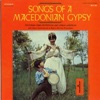
1994
Esma Redžepova & Usnija Jasarova, Songs of the Macedonian Gypsy
A singer from Skopje known as the “Queen of Romani music,” who brought songs in the Romani language to a wide audience from Yugoslav times on.
-

1995
Goran Bregović, Underground (Soundtrack)
Goran Bregović’s score for Emir Kusturica’s film — it carried the sound of Romani brass bands around the world.
-

1995
Kim Kashkashian, Karaindrou: Ulysses' Gaze
Eleni Karaindrou’s score for Theo Angelopoulos’s Ulysses’ Gaze, recorded in December 1994 with Kim Kashkashian’s viola as its main voice and released by ECM; the film won the Grand Jury Prize at Cannes in 1995.
-

1998
Fanfare Ciocărlia, Radio Pașcani
A Romani brass band from the village of Zece Prăjini in northeastern Romania, famous for breakneck tempos. This debut made their name abroad.
-

2001
Taraf de Haïdouks with Kočani Orkestar, Band of Gypsies
The Romani band from Clejani, Romania, live with North Macedonia’s Kočani Orkestar.
-

2003
Boban Marković Orkestar, Boban i Marko
Boban Marković — many times the champion of Serbia’s Guča trumpet festival — and his son Marko.
-

2003
Mostar Sevdah Reunion, A Secret Gate
Musicians from Mostar play sevdalinka, the Bosnian song of longing, renewed after the war.
-

2004
Amira Medunjanin, Rosa
The debut of Sarajevo singer Amira Medunjanin, singing sevdalinka with deep restraint.
-

2007
Shantel, Disko Partizani
Frankfurt DJ Shantel joins the music of his Bukovinian ancestors, brass and the club, sparking the Balkan beat craze.
-

2009
Kottarashky, Opa Hey!
The debut by Kottarashky, Sofia-born Nikola Gruev, released by Germany’s Asphalt Tango. He blends field recordings made around Bulgaria with electronica, hip-hop and jazz — a style he calls “Balkan psychedelic”.
-

2014
Subcarpați, Piele de găină
An album by Subcarpați, the band Bean MC founded in 2010 to fuse hip-hop with Romanian folk music, released between Underground Folclor (2012) and Satele Unite ale Balcanilor (2016).
-

2017
Saz'iso, At Least Wave Your Handkerchief at Me
An eight-piece group from southern Albania playing saze, an iso-polyphonic style in which two melodic voice lines ride over a drone. Joe Boyd crowdfunded the project and recorded it in Tirana for Glitterbeat.
-

2018
Emir Kusturica & The No Smoking Orchestra, Corps Diplomatique
Film director Emir Kusturica’s band, known for the raucous “unza unza” sound mixing Romani brass and punk.
-

2022
Marina Satti, YENNA
The debut album of Marina Satti, founder of the polyphonic group fonés and the women’s choir chóres, blending Greek traditional music and polyphony with electronics and art-pop. A commercial and critical success, it led to a European tour of more than four months.