Central Asia & Mongolia
Mongolia · Tuva · Uzbekistan · Kazakhstan
Steppe and oasis: throat singing that produces several notes at once, the horsehead fiddle, Uzbek shashmaqam — nomadic and Silk Road memories carried in sound.
27 recordings, 1973–2023
-

1973
Nonesuch Explorer Series, EXPLORER SERIES: TIBET - Tibetan Buddhism: Tantras of Gyütö
Recorded by David Lewiston in 1972 at the Gyütö Tantric College in Dalhousie, India: twelve lamas and monks chant the Mahakala tantra with instrumental accompaniment. Issued in Nonesuch’s Explorer Series.
-

1976
Nonesuch Explorer Series, EXPLORER SERIES: TIBET - Tibetan Buddhism: The Ritual Orchestra & Chants
Monks of Khampagar Monastery in the Tashi Jong community, Himachal Pradesh, perform Drukpa Kagyu rituals with chant and ritual orchestra, recorded by David Lewiston on 26 May 1973.
-

1981
Soyol Erdene, Soyol Erdene
The only full album by Soyol Erdene, the state-sponsored group formed in late 1971 and described as Mongolia’s first rock band, released in 1981.
-

1990
Various Artists, Tuva: Voices from the Center of Asia
Field recordings made in Tuva in 1987 by Theodore Levin with Eduard Alekseev and Zoya Kirgiz, rich in throat singing. Levin described it as the first recording of Tuvan music released in the West.
-

1991
Various Artists, Mongolia: Traditional Music (UNESCO Collection from Smithsonian Folkways)
Mongolian traditional music recorded by Alain Desjacques in 1988: long song (urtyn duu) and the horse-head fiddle morin khuur, along with short songs, Jew’s harp, flutes, fiddles, lutes and zithers.
-
1992
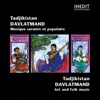
Davlatmand Kholov & Abdoussatar Abdoullaev, Tadjikistan - Davlatmand
A 1992 album by Davlatmand Kholov, a singer from Kulob in southern Tajikistan, with Abdoussatar Abdoullaev. An expert in the southern folk genre falak, he also played dutar, ghijak and setar; he died in Dushanbe in February 2024.
-

1993
Huun-Huur-Tu, Sixty Horses in My Herd
A group from Tuva whose throat singing produces a drone and an overtone melody at once, over string accompaniment evoking a horse’s gait.
-

1994
Shu-De, Voices from the Distant Steppe
The first album by Tuvan throat-singing group Shu-De, released on Peter Gabriel’s Real World label: five styles of throat singing, accompanied and unaccompanied, alongside interpretations of shamanic songs.
-
1994
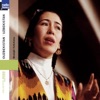
Monâjât Yultchieva, Ouzbekistan : Monâjât Yultchieva
The first widely available recording by Monajat Yultchieva, a singer of Uzbek classical music and shashmaqam, accompanied by the ensemble of her mentor, rubab player Shavkat Mirzaev, and issued on the French label Ocora.
-

1996
Yungchen Lhamo, Tibet, Tibet
Tibetan singer Yungchen Lhamo’s first international album, recorded in February 1996 for Real World: devotional songs sung largely a cappella. Her earlier Australian release, Tibetan Prayer, had won the 1995 ARIA award for best world music album.
-

1999
Yat-Kha, Dalai Beldiri
A band joining Tuvan throat singing with rock and punk; the earth-deep kargyraa voice meets guitars.
-

1999
Huun-Huur-Tu, Where Young Grass Grows
Tuvan throat-singing group Huun-Huur-Tu recorded with Scottish musicians, adding harp and smallpipes — the first time they used instruments from outside Tuva other than guitar.
-

1999
Ondar, Back Tuva Future: The Adventure Begins
Tuvan throat singer Kongar-ol Ondar’s album for Warner Bros., setting throat singing in a Western worldbeat production. Guests include Willie Nelson and Randy Scruggs, and the late physicist Richard Feynman is credited too.
-

2000
Sainkho Namtchylak, Stepmother City
Tuvan singer Sainkho Namtchylak sets old Tuvan instruments beside electric guitar, turntables, double bass, shakuhachi and duduk.
-

2003
Sevara Nazarkhan, Yol Bolsin
The Uzbek singer accompanies herself on the dutar and frames traditional song with subtle electronics.
-

2004
Altan Urag, Made in Altan Urag
The Ulaanbaatar band were pioneers in driving nomadic music — horsehead fiddle, khöömii throat singing — with rock.
-

2006
Various Artists, Music of Central Asia, Vol. 1: Tengir-Too - Mountain Music from Kyrgyzstan
Kyrgyz ensemble Tengir-Too, led by Nurlanbek Nyshanov, opens the Aga Khan Music Initiative and Smithsonian Folkways series with mountain music on the three-string komuz, Jew’s harps and flutes.
-

2007
Altai Kai, Altai Throat Singing
A group from the Altai Republic in Russia, carrying on kai — epic tales sung in a deep throat voice — with the topshur lute and jaw harp.
-

2009
Ulytau, Jumyr-Kylysh
A Kazakh trio who play küy, the instrumental pieces of the two-string dombra, ferociously with electric guitar and violin.
-

2010
Hanggai, He Who Travels Far 杭盖乐队 — He Who Travels Far
The second album by Hanggai, a Mongolian band based in Beijing, reworking Mongolian folk songs from China with tobshuur lute and banjo.
-

2012
Nine Treasures, Arvan Ald Guulin Honshoor
The debut of Mongolian folk-metal band Nine Treasures, released on a Beijing metal label, setting balalaika and morin khuur against a metal band. In 2013 they won the Wacken Metal Battle.
-

2013
Sanubar Tursun, Arzu (Songs of the Uyghurs)
Uyghur singer and dutar player Sanubar Tursun sings muqam and folk songs of the Uyghurs.
-

2017
Hanggai, Homeland 杭盖乐队 — 故鄉
A band of Mongolian musicians formed in Beijing, singing songs of the grasslands with khoomei throat singing, morin khuur and tobshuur over rock rhythms.
-

2019
The HU, The Gereg
A Mongolian band combining horsehead fiddle and throat singing with heavy rock, which reached the world through the internet.
-

2020
Alash Ensemble, Meni Mana
A digital-only 2020 album by the Tuvan throat-singing trio Alash, who trained in traditional music from childhood and have won xöömei competitions, and who blend modern touches into the traditional sound.
-

2022
The Hu, Rumble of Thunder
The Hu’s second album, on America’s Better Noise Music, carrying their morin khuur and throat-singing heavy rock further; on release the band toured the US with Five Finger Death Punch and Megadeth.
-

2023
Enji, Ulaan
Mongolian singer Enji (Enkhjargal Erkhembayar)’s 2023 album for Squama, setting songs and spoken monologues in Khalkha Mongolian against jazz played by drummer Mariá Portugal and others. The Washington Post’s critic named it one of the best albums of 2023.