China
Shanghai · Beijing · Jiangnan · Xi’an · Chengdu
1930s–40s Shanghai was a capital of popular song where jazz met film music. Then come the masters of erhu and pipa — and rock, born in Beijing amid the reforms of the 1980s, with new voices ever since.
26 recordings, 1940–2020
-

1940
Zhou Xuan, Ladies of Chinese Song – Zhou Xuan, Volume 1 Zhou Xuan — Ladies of Chinese Song – Zhou Xuan, Volume 1
Shanghai’s leading singer and film actress of the 1930s–40s — the face of shidaiqu, pop that blended jazz with Chinese melody, nicknamed the “Golden Voice.”
-

1950
Hua Yanjun (Abing), Abing: Complete Recordings (1) 華彦鈞(阿炳) — 阿炳全集(1)
A blind street musician of Wuxi. His erhu solo “Erquan Yingyue,” recorded in 1950 months before his death, became one of China’s best-known instrumental pieces.
-

1989
Cui Jian, Rock ’n’ Roll on the New Long March 崔健 — 新长征路上的摇滚
A Beijing trumpeter of Korean descent who pioneered Chinese rock. His 1986 song “Nothing to My Name” became an anthem for the young.
-

1991
Black Panther, Black Panther 黑豹 — 黑豹
The debut of a Beijing hard rock band; with Dou Wei singing “Don’t Break My Heart,” it became a huge Chinese rock hit.
-

1992
Tang Dynasty, Tang Dynasty 唐朝乐队 — 唐朝
The 1992 debut by Tang Dynasty, usually considered China’s first heavy metal band. Featuring “A Dream Return to Tang Dynasty” and a version of “The Internationale”, it is still named by Chinese critics as a high point of the country’s heavy metal.
-
1994
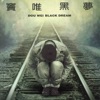
Dou Wei, Black Dream 窦唯 — 黑夢
Dou Wei’s solo album after leaving Black Panther: dark and introspective, it showed another side of Chinese rock.
-

1994
Zhang Chu, It’s Shameful to Be Lonely 张楚 — 孤獨的人是可恥的
Xi’an-born Zhang Chu sang poetic songs of urban loneliness in the Beijing rock scene after Cui Jian.
-

1994
He Yong, Garbage Dump 何勇 — 垃圾場
From He Yong of Beijing rock’s first generation. The title song, “Garbage Dump,” written at the height of the Tiananmen protests, hammers repeated riffs and a shouted question — the most controversial of the early Beijing rock albums released on the mainland.
-

1994
Zheng Jun, Chiluoluo (Stark Naked) 郑钧 — 赤裸裸
Zheng Jun’s first album, released in June 1994 on Red Star Production, the label he had signed with in 1992. “Back to Lhasa” was named one of the ten best songs of 1995 by the Dongfang Fengyun Bang chart, and the record is counted among the landmark mainland rock albums of 1994.
-

1999
Pu Shu, I Am Going to 2000 朴树 — 我去2000年
Pu Shu’s debut at 23: with “Birch Forest” and more, he sang the anxieties and innocence of youth at the century’s turn, to a huge response.
-

2000
Xu Wei, Nà Yì Nián (That Year) 许巍 — 那一年
The second album by rock singer Xu Wei, released in November 2000 as the follow-up to In Another Place, his 1997 debut on the Red Star label.
-

2003
Second Hand Rose, Second Hand Rose 二手玫瑰 — 二手玫瑰
Liang Long’s band from Harbin, mixing the tunes and costumes of north-eastern folk theatre, errenzhuan, with rock.
-

2005
Cui Jian, Gei ni yidian yanse (Show You Colour) 崔健 — 给你一点颜色
Cui Jian’s fifth solo album, released in March 2005. Its songs had reportedly been finished years earlier, and the record, described as a cerebral one, is organised around the three colours red, yellow and blue.
-

2007
Carsick Cars, Carsick Cars
Beijing trio Carsick Cars’ debut, recorded in spring 2007 with P.K.14’s Yang Haisong producing and released on the new label Maybe Mars. “Zhong Nan Hai,” named for both a cigarette brand and the Party leadership compound, became an anthem of the Beijing underground.
-

2009
Wu Tiao Ren, Xiancheng ji (County Town Chronicle) 五条人 — 县城记
The debut by Wu Tiao Ren, formed in 2008 by Ren Ke and Mao Tao from Haifeng in Guangdong. Sung entirely in the Haifeng dialect about life in small county towns, it won Southern Weekly’s music award for 2009 and earned the band best folk artist at the Chinese Music Media Awards.
-

2010
Omnipotent Youth Society, Omnipotent Youth Society 万能青年旅店 — 万能青年旅店
The debut of a band from Shijiazhuang, Hebei: poetic songs of provincial stagnation and youthful unrest, with long, trumpet-lit tracks.
-

2013
Wu Man, 琵琶蠻
A pipa player from Hangzhou who has carried the instrument far — from classic traditional pieces to new works and collaborations.
-

2013
Song Dongye, North of Anhe Bridge 宋冬野 — 安和桥北
Beijing singer-songwriter Song Dongye; “Anhe Bridge” brought Chinese indie folk to a wide audience.
-

2015
Chen Li, Rú Yě 陈粒 — 如也
Chen Li’s first solo album, made independently with no label or management team: 15 songs including “Qimiao Nengli Ge,” which had already spread widely on social media in 2014.
-

2016
Zhao Lei, Wúfǎ Zhǎngdà (Can’t Grow Up) 赵雷 — 无法长大
Zhao Lei’s third album, home to “Chengdu,” written in 2014. Once he sang it on the TV show Singer in 2017, it became his signature song.
-

2016
New Pants, Shengming yin ni er huore (Life’s Hot Because of You) 新裤子乐队 — 生命因你而火热
New Pants’ eighth studio album, released in April 2016, on which the band returned to straightforward rock with songs such as the title track and “People Without Ideals Don’t Feel Sad”. “About Insomnia and the World at Night” won best rock single at the 5th Abilu Music Awards.
-

2017
Gong Linna & Bang on a Can All-Stars, Cloud River Mountain 龚琳娜 & Bang on a Can All-Stars — Cloud River Mountain
A singer from Guizhou with New York’s Bang on a Can All-Stars, using the vocal styles of folk songs from across China in new music.
-

2017
Re-TROS, Hecai zhiqian (Before the Applause)
The first album in eight years by Beijing band Re-TROS, released on Modern Sky and produced by Héctor Castillo. It moves from their post-punk roots towards electronic textures and experimental sampling; the same year they played Depeche Mode’s European arena dates.
-

2018
Wild Children (Ye Haizi), Dàqiáo Xiàmiàn (Under the Bridge) 野孩子 — 大橋下面
Wild Children, formed in 1995 by musicians from Lanzhou, made their first studio album only after 23 years. The band draws on northwestern folk forms such as xintianyou and hua’er, gathered on journeys along the Yellow River.
-

2020
Omnipotent Youth Society, Inside the Cable Temple 万能青年旅店 — 冀西南林路行
Omnipotent Youth Society’s second album, ten years after their debut, inspired by the Taihang Mountains of their native Hebei — long, sweeping songs that set a sales record for independent digital albums in China.
-

2020
Hiperson, Chengzhang xiaoshuo (Bildungsroman) 海朋森 — 成長小說
The third album by Chengdu band Hiperson, released in July 2020 on Beijing indie label Maybe Mars. They were scouted by P.K.14 frontman Yang Haisong, the label’s A&R man, and had been with Maybe Mars since their 2015 debut.