Hong Kong & Taiwan
Hong Kong · Taipei · Taiwan’s Indigenous villages
Cantonese “Cantopop” and Taiwan’s Mandarin pop were loved across the Chinese-speaking world and Asia. The voices of Taiwan’s Indigenous Amis people even found their way, unasked, into a worldwide hit.
33 recordings, 1959–2026
-

1959
Yao Lee, Yao Li zhi ge (Songs of Yao Lee) 姚莉 — 姚莉之歌
Yao Lee, Shanghai’s “Silver Voice” beside Zhou Xuan’s “Golden Voice,” moved to Hong Kong in 1950 and kept recording for EMI. Built around songs from her films Ge mi xiao jie and Duo qing de ye mao, this LP shows Mandarin shidaiqu living on in Hong Kong.
-

1960
Yam Kim-fai & Pak Suet-sin, Tai Nui Fa (Princess Changping) 任劍輝 & Bai Xue Xian — Di Nu Hua
Tong Tik-sang’s Cantonese opera Princess Changping was premiered in 1957 at Lee Theatre by Yam Kim-fai and Pak Suet-sin’s Sin Fung Ming troupe. Crown Records recorded the pair in 1960; the streaming edition holds three scenes, 43 minutes in all.
-

1961
Grace Chang (Ge Lan), Ge Lan zhi ge (Songs of Grace Chang) 葛蘭 — 葛蘭之歌
Grace Chang, the MP&GI star whose 1957 Mambo Girl set off a mambo craze, recorded this EMI album of film songs — “I Love Cha Cha” from that film plus numbers from her films Kong zhong xiao jie, Qian mian nü lang and Jin feng huang: Latin-tinged Mandarin pop made in Hong Kong.
-

1974
Sam Hui, Games Gamblers Play 許冠傑 — 鬼馬雙星
A Hong Kong singer-actor who, when English songs ruled, sang about daily life in everyday Cantonese with humour — laying the foundation of Cantopop.
-

1982
Lo Ta-yu, Zhi Hu Zhe Ye 羅大佑 — 之乎者也
The debut of a Taiwanese singer-songwriter whose sharp, socially engaged lyrics opened a new era for Taiwanese song.
-

1983
Teresa Teng, Light Exquisite Feelings 鄧麗君 — 淡淡幽情
A singer from Taiwan setting Song-dynasty poems to new melodies. She was sung across the Chinese-speaking world and loved in Japan too.
-

1983
Julie Sue, Da Cuo Che – Original Soundtrack 蘇芮 — 電影《搭錯車》原聲大碟
The soundtrack to Yu Kan-ping’s film Da Cuo Che, released by UFO Records in 1983 and produced by Li Shou-chuan, who also wrote “Yi Yang de Yue Guang.” It marked Julie Sue’s switch to singing in Mandarin, and Hou Dejian’s “Jiu Gan Tang Mai Wu” made her a star; Lo Ta-yu and Wu Nien-jen also took part.
-

1985
Anita Mui, Huai Nü Hai (Bad Girl) 梅艷芳 — 壞女孩
Hong Kong singer Anita Mui’s 1985 album, produced by Michael Lai and built largely on adapted songs. It is reported to have set a Hong Kong sales record.
-

1987
Dave Wang, Yi Chang You Xi Yi Chang Meng (A Game, a Dream) 王傑 — 一場遊戲一場夢
Dave Wang’s 1987 debut on UFO Records. The title song, which Jonathan Lee called a “song of the century,” set off a “wanderer” craze in Taiwan, and the albums that followed were hits too.
-

1989
Tat Ming Pair, Yi Nan Ping 達明一派 — 意難平
Hong Kong duo Tat Ming Pair’s 1989 album, its title taken from Dream of the Red Chamber. It includes “Love in the Time of Plague,” about victims of AIDS, and “Forget He Is a She,” considered one of the first Cantopop songs to explore gender fluidity.
-

1990
Beyond, Party of Fate
A Hong Kong rock band that sang of peace, freedom and Africa in Cantonese, becoming the city’s defining band.
-

1990
Lim Giong, Marching Forward 林強 — 向前走
Lim Giong’s debut sang in Taiwanese Hokkien but broke from the melancholy of old Hokkien pop into rock — selling over 400,000 copies and becoming a landmark of the New Taiwanese Song movement.
-

1993
Jacky Cheung, Goodbye Kiss 張學友 — 吻別
Hong Kong singer Jacky Cheung; the Mandarin title song was a vast hit across the Chinese-speaking world.
-

1994
Faye Wong, Random Thoughts 王菲 — 胡思亂想
Born in Beijing, a star in Hong Kong; with a dreamy sound akin to the Cocteau Twins, she widened what Chinese pop could be.
-

1996
Tsai Chen-nan, Nan’s Song 蔡振南 — 南歌
Tsai Chen-nan, singer and writer of Taiwanese Hokkien songs such as “Kim Pau Gin,” sings them in a plain, weathered voice — Golden Melody Album of the Year.
-

1996
A-Mei, Sisters 張惠妹 — 姊妹
The debut of A-Mei, of the Puyuma people of eastern Taiwan. The title song draws on traditional Puyuma singing, with her mother and sisters joining the chorus; it sold over a million copies in Taiwan.
-

1998
Kuo Ying-nan (Difang) & the Malan Chorus, Circle of Life 郭英男 & 馬蘭吟唱隊 — 生命之環
Amis singers from Taitung in eastern Taiwan. Kuo Ying-nan (Difang)’s voice became known worldwide after it was used without permission in Enigma’s “Return to Innocence.”
-

1998
Wu Bai & China Blue, Lonely Tree, Lonely Bird 伍佰&China Blue — 樹枝孤鳥
Wu Bai and his band China Blue sang this album in Taiwanese Hokkien, renewing the language’s songs with rock and electronics — Golden Melody Album of the Year.
-
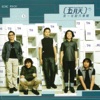
1999
Mayday, Mayday’s First Album 五月天 — 五月天第一張創作專輯
The debut of Taipei band Mayday, with songs written by singer Ashin in Mandarin and Taiwanese Hokkien — the starting point of a band that would come to define rock across the Chinese-speaking world.
-

2001
Jay Chou, Fantasy 周杰倫 — 范特西
A Taiwanese singer-songwriter whose “China wind” mixed R&B and hip-hop with Chinese melodies and instruments, defining 21st-century Mandopop.
-

2002
Cheer Chen, Groupies 陳綺貞 — 吉他手
The third album by guitar-playing singer-songwriter Cheer Chen, formerly of an underground band: delicate songs and guitar that made her a defining figure of Taiwanese indie pop.
-

2004
My Little Airport, The OK Thing to Do on Sunday Afternoon Is to Toddle in the Zoo
My Little Airport’s debut, made by Ah P and Nicole while still students: light electronic-tinged pop sung in Cantonese and English that opened a new current in Hong Kong indie.
-

2005
Eason Chan, U87 陳奕迅 — U87
Eason Chan’s album with “Exaggerated” — a landmark of 2000s Cantopop.
-

2005
Hu Defu, In a Flash 胡德夫 — 匆匆
The first album by Puyuma singer-pianist Hu Defu, released at 55 and gathering songs written over three decades; “Wind of the Pacific” won Best Lyrics and Song of the Year at the Golden Melody Awards.
-
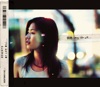
2006
Deserts Chang, My Life Will 張懸 — My Life Will
Deserts Chang’s debut, songs written between the ages of 13 and 19, including the much-loved “Baobei.” It earned four Golden Melody Award nominations, including Best Mandarin Album.
-

2013
Sheng-Xiang & Band, I Village 生祥樂隊 — 我庄
Lin Sheng-xiang’s band from Meinong in southern Taiwan sing, in Hakka, of village life and changing farming, with moon lute and guitar.
-

2016
Sangpuy, Yaangad 桑布伊 — 椏幹
Sangpuy of Taitung’s Puyuma people sings ancestral and original songs in Puyuma — Golden Melody Album of the Year.
-

2018
Sunset Rollercoaster, CASSA NOVA 落日飛車 — CASSA NOVA
The second full-length album by Taipei’s Sunset Rollercoaster: soft synths and swaying guitars in a city-pop mould, reaching listeners across Asia and the West alongside the popularity of “My Jinji.”
-

2019
ABAO, kinakaian (Mother Tongue) 阿爆 — kinakaian 母親的舌頭
ABAO, of southern Taiwan’s Paiwan people, made electronic pop sung entirely in Paiwan — Golden Melody Album of the Year.
-

2023
No Party For Cao Dong, The Clod 草東沒有派對 — 瓦合
The Taipei band’s second album, singing a young generation’s sense of being stuck — Golden Melody Album of the Year.
-

2024
Siri Lee, Suí 李竺芯 — Suí 水
A Taiwanese Hokkien-language album by singer-songwriter Siri Lee — Golden Melody Album of the Year.
-

2025
Jolin Tsai, Pleasure
Taiwanese star Jolin Tsai’s album is built around the seven deadly sins as expressions of human desire. It was the best-selling album by a female artist in Taiwan in 2025 and won Album of the Year and Best Female Mandarin Singer at the 37th Golden Melody Awards.
-

2026
Jay Chou, Children of the Sun 周杰倫 — 太陽之子
Jay Chou’s 16th album, his first in nearly four years, released digitally in March 2026 with 12 new songs plus a bonus track for fans. The digital edition reportedly passed 2.18 million copies in two days; the title comes from a nickname given to him by Jacky Cheung.