Congo Basin
DR Congo · Republic of the Congo
Around Kinshasa and Brazzaville, facing each other across the Congo River, Cuban records inspired “Congolese rumba” — and later soukous, the guitar music that set the whole continent dancing.
A rhythm of this region: Rumba clave
32 recordings, 1953–2024
-
1953
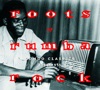
Various Artists, Roots of Rumba Rock: Congo Classics 1953–54
Recordings from the Loningisa label in Léopoldville (now Kinshasa), including the young Franco — a window onto Congolese rumba as it took shape.
-

1957
Franco, Marveilles Du Passe: 1957 -1959
The first volume of the Merveilles du passé series, collecting early singles by Franco and OK Jazz (formed 1956), first issued on 78s by the Congolese Loningisa label, full of rumba, calypso and Cuban son.
-

1958
Various Artists, Ethnic Folkways Library - The Pygmies of the Ituri Forest
Colin Turnbull and Francis Chapman’s recordings of the songs and instrumental music of the BaMbuti (Mbuti), a nomadic people of the Ituri Forest in the north-east of the Belgian Congo, issued by Folkways in 1958.
-

1960
Grand Kallé et l'African Jazz, Indépendance Cha-Cha, Vol. 1
Joseph Kabasele’s African Jazz. “Indépendance Cha Cha,” recorded in Brussels during the 1960 independence talks, became an anthem of Africa’s independence era.
-

1963
Docteur Nico & Tabu Ley Rochereau, L'African Fiesta, Vol. 1 (1962–1963)
Docteur Nico and Tabu Ley Rochereau, newly split from African Jazz. Nico’s liquid guitar defines the golden age of 1960s Congolese music.
-

1971
Franco & Le T.P.O.K. Jazz, Likambo ya ngana (1971 / 1972)
Early-1970s recordings by Franco and OK Jazz, who led Kinshasa’s music for three decades from 1956: Franco’s thick-toned guitar, trading singers and the accelerating sebene of Congolese rumba’s golden age.
-

1973
Tabu Ley Rochereau, Kaful Mayay
Kinshasa’s other great voice besides Franco, after renaming his band Afrisa International in 1970: a sweet, soaring tenor and polished arrangements that made rumba ever more urbane.
-

1984
Zao, Ancien combattant
Zao, a singer born near Brazzaville, released his first album, in Paris. Its title song, an anti-militarist anthem in the slang of the tirailleurs sénégalais, became his first international hit and is still loved across francophone Africa.
-

1985
Franco & TPOK Jazz, Francophonic, Vol. 2
Franco and TPOK Jazz in the 1980s. With long-form arrangements and lyrics about society and love, Franco became the grand master of Lingala music.
-

1985
Ray Lema, Medecine
Congolese pianist Ray Lema recorded this mostly electronic album in London with producer Martin Meissonnier for Celluloid, mixing synthesizers with Kongo choirs and djembe.
-

1986
Zaïko Langa Langa, Nippon Banzai
Zaïko Langa Langa, formed by Kinshasa youngsters in 1969 and the cradle of Papa Wemba and many more, made this after their 1986 tour of Japan — the energy of their shows captured in their biggest-selling record.
-

1988
Mbilia Bel, Phénomène
Mbilia Bel, who rose to fame with Tabu Ley Rochereau, made this in Paris after going solo. Guitarist Rigo Star arranged and played guitars and bass, keeping to the mellow Kinshasa sound — a big success at home and abroad.
-

1989
Kanda Bongo Man, Kwassa Kwassa
A Zairean singer based in Paris who cut the slow opening sections and went straight to the fast guitar sebene — soukous that ruled 1980s dance floors.
-

1995
Papa Wemba, Emotion
Kinshasa’s Papa Wemba on Real World, bringing Congolese rumba in a European pop sound.
-

1995
Lokua Kanza, Wapi Yo
The second album by the Kinshasa-raised, Paris-based singer: soft songs in Lingala and Swahili and layered voices over quiet, guitar-led arrangements, widely heard across Europe.
-

1996
Wenge Musica 4×4 BCBG, Pentagone
The last album by Kinshasa’s youth band Wenge Musica, with JB Mpiana and Werrason at their peak — its fast dance sebenes fed what spread as ndombolo. The band split the following year.
-

1997
Koffi Olomide, Loi
Koffi Olomide; the title song became a classic of Congolese ndombolo dance music.
-

1998
Sam Mangwana, Galo Negro
Born in Kinshasa to Angolan parents and a singer with both Franco and Tabu Ley, Sam Mangwana blends rumba with Angolan and Caribbean colours into songs for all of Africa.
-

1999
Bisso Na Bisso, Racines
French rapper Passi gathered fellow artists with roots in Congo-Brazzaville for this album, setting rap over Congolese rumba, soukous and zouk, with guests including Papa Wemba, Koffi Olomidé and Kassav’.
-

2000
JB Mpiana & Wenge BCBG, TH Toujours humble
A solo album from JB Mpiana, leader of Wenge BCBG after the Wenge Musica split; it sold more than 100,000 copies, earning him a second gold disc.
-

2001
Werrason, Kibuisa Mpimpa / Opération Dragon
Werrason’s first solo album, a double, after leading Wenge Musica Maison Mère out of the split — riding the momentum of a sold-out Paris-Bercy show with the full heat of ndombolo.
-

2004
Konono Nº1, Congotronics
A Kinshasa likembe (thumb piano) band amplified through home-made gear. Their distorted, trance-like grooves electrified rock and electronic scenes worldwide.
-

2009
Staff Benda Bilili, Très Très Fort
A Kinshasa street band led by polio survivors, playing rumba and funk with home-made instruments and powerful voices.
-

2011
Baloji, Kinshasa Succursale
Lubumbashi-born, Belgium-raised rapper Baloji recorded this in Kinshasa with local musicians — Konono Nº1, Zaïko Langa Langa and more — tying rap to the many sounds of Congo.
-

2013
Fally Ipupa, Power ‘Kosa Leka’
Kinshasa’s Fally Ipupa joined Congolese rumba and R&B and became the star of a new generation.
-

2013
Jupiter & Okwess, Hotel Univers
The international debut of Kinshasa’s Jupiter Bokondji and Okwess, named after the hotel where he writes: traditional Congolese rhythms, funk and rock portraying the modern city.
-

2014
Kasai Allstars, Beware the Fetish
The second album by Kasai Allstars, a supergroup whose members come from five ethnic groups: over 100 minutes of xylophones, amplified thumb pianos and electric guitars, with songs wary of occult belief.
-

2015
Mbongwana Star, From Kinshasa
Founded in Kinshasa by former members of Staff Benda Bilili; guitars and percussion layered with electronic treatments, sketching a futuristic Congolese sound.
-

2019
KOKOKO!, Fongola
A Kinshasa collective combining instruments built from scrap with electronics — the sound of the city right now.
-

2022
Ferre Gola, Dynastie
Ferre Gola, who came up through Wenge Musica Maison Mère, keeps Congolese rumba at the centre while drawing in reggaeton percussion and salsa — it earned him his first gold certification.
-

2022
Fally Ipupa, Formule 7
Fally Ipupa’s seventh studio album, featuring the single “Mayday.” It was certified export gold by France’s Centre National de la Musique, reported as a first for an album of pure Congolese rumba.
-

2024
KOKOKO!, Butu
Kinshasa collective KOKOKO!’s second album after 2019’s Fongola, released on Transgressive. Now pared down to Bianko and Débruit, they pound pots, pans and plastic containers into dense polyrhythms with synths; the title is Lingala for “night.”