The Caribbean
Cuba · Jamaica · Trinidad · Puerto Rico
Islands where Spanish, African and Indigenous cultures met. Cuban son, Jamaican ska and reggae, Trinidadian calypso — few places shaped the popular music of the twentieth century more.
A rhythm of this region: Son clave (3-2)
47 recordings, 1925–2026
-
1925
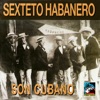
Sexteto Habanero, Son Cubano 1924–1927
Formed in Havana in 1920. With tres, guitar and bongos, this sextet polished the son that had come to the city from eastern Cuba, and spread it on record.
-

1929
Alexandre Stellio, Alexandre stellio: Intégrale Chronologique (1929-1931)
All 40 sides that Martinique clarinettist and bandleader Alexandre Stellio cut from his first Odéon session in 1929 through 1931, in order. A star of the Antillean dance halls of Paris, he plays mostly biguines, with mazurkas and Creole waltzes.
-

1930
Trío Matamoros, Grandes Éxitos
A trio from Santiago de Cuba. From their first recordings in 1928 their sones and boleros travelled far beyond Cuba — later taken up by Congolese musicians.
-

1942
Arsenio Rodríguez, Arsenio Rodríguez y su conjunto. Grabaciones completas RCA Victor, Vol. 1: 1940-1944
Arsenio Rodríguez’s RCA Victor recordings from his first session under his own name — “El pirulero no vuelve más,” Havana, September 1940 — through 1944. It is the first volume of Spanish label Tumbao’s 2008 reissue of nearly all his 1940–56 RCA sides.
-

1952
Lord Kitchener and others, London Is the Place for Me
Calypsos recorded in 1950s London by Trinidad’s Lord Kitchener — who arrived on the Empire Windrush in 1948 — and others: the new city seen through migrants’ eyes.
-

1955
The Brute Force Steelband, Brute Force Steel Bands of Antigua
Emory Cook recorded Antigua’s Brute Force Steel Band on the island for his Cook Records label, releasing the album in December 1955. The same sessions also captured rival bands such as Big Shell and Hell’s Gate.
-

1956
Pérez Prado, Havana, 3 A.M.
The Cuban pianist-arranger who, based in Mexico City from the late 1940s, turned the punchy big-band mambo into a worldwide craze.
-

1956
Harry Belafonte, Calypso
The New York-born singer, who spent part of his childhood in Jamaica, brought Caribbean song to mainstream America with “Day-O”; often cited as the first LP to sell a million copies.
-

1956
Orquesta Aragón, That Cuban Cha-Cha-Cha
A 1956 RCA Victor LP by Orquesta Aragón, the Cuban charanga of flute and violins led by Rafael Lay, whose own pieces such as “Sabrosona” were in its repertoire. After Lay’s death in 1982 Richard Egües took over as leader.
-

1963
The Mighty Sparrow, The Outcast
Trinidad’s “Calypso King,” whose songs mixed humour with sharp social commentary and won the carnival competition many times.
-

1964
Prince Buster, Fabulous Greatest Hits
A singer-producer who came out of Kingston’s sound-system culture and cut many of the defining ska singles of the early 1960s.
-

1971
U-Roy, Version Galore
The Jamaican DJ who popularised toasting — chanting over the instrumental “version” side of a record. The voice of the sound system, made into records.
-

1972
Jimmy Cliff and others, The Harder They Come
The soundtrack to the film starring Jimmy Cliff; with songs by Toots & the Maytals and others, it introduced reggae to the world.
-

1973
Bob Marley & The Wailers, Catch a Fire
The Wailers’ international debut on Island Records — Jamaican reggae presented to the world as a rock album.
-

1973
Toots & The Maytals, Funky Kingston
Toots Hibbert’s group, known for “Do the Reggay,” the song that spread the word “reggae” — gospel in the voice, soul in the heat.
-

1975
Silvio Rodríguez, Días y Flores
The leading singer-songwriter of Cuba’s nueva trova, singing poetically of post-revolutionary society and private feeling, centred on guitar.
-

1976
Augustus Pablo, King Tubbys Meets Rockers Uptown
Augustus Pablo’s melodica-led “Far East” sound, dubbed by King Tubby. The title track, a dub of Jacob Miller’s “Baby I Love You So”, had first appeared as a single in 1974.
-

1977
Bob Marley & The Wailers, Exodus
Recorded in London after an assassination attempt in Jamaica; with “One Love” and “Jamming,” it was named Album of the Century by Time.
-

1977
Mongo Santamaría, Amanecer
The Havana-born conguero who spent decades bridging Afro-Cuban music and jazz in the US; as “Dawn,” it won the Grammy’s Latin award.
-

1977
Culture, Two Sevens Clash
Culture’s debut, led by Joseph Hill and recorded in 1976 at Joe Gibbs’s studio in Kingston. Its title song prophesied a reckoning on 7 July 1977, when “the two sevens clash” — a day on which many Jamaican businesses and schools reportedly shut.
-

1977
The Congos, Heart of the Congos
Produced by Lee “Scratch” Perry at his Black Ark studio in Kingston, with Boris Gardiner and Ernest Ranglin playing and Gregory Isaacs among the backing singers. A dispute with Island meant it came out on Perry’s own label, in a first pressing said to be only a few hundred copies.
-

1982
Sister Nancy, One Two
Jamaican DJ Sister Nancy’s debut, recorded at Channel One for Winston Riley’s Techniques label. “Bam Bam”, the last track she voiced for it, rides Riley’s Stalag riddim and went on to be widely sampled.
-

1984
Black Uhuru, Anthem
The Kingston group, with Sly & Robbie’s rhythm section, pointed reggae toward the digital age — the first winner of the Grammys’ new reggae award.
-

1984
Jacob Desvarieux & Kassav’, Yélélé
From the core of Guadeloupe’s Kassav’: “Zouk-la sé sèl médikaman nou ni” spread French Antillean zouk around the world.
-

1987
Peter Tosh, No Nuclear War
The last studio album by Wailers co-founder Peter Tosh. He was killed at his Kingston home in September 1987, the year of its release; it won a Grammy the next year.
-

1990
Juan Luis Guerra 4.40, Bachata Rosa
The Dominican singer took bachata — long dismissed as rural bar music — and, with poetic lyrics and refined arrangements, made it a worldwide hit.
-
1991
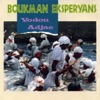
Boukman Eksperyans, Vodou Adjae
Haiti’s Boukman Eksperyans, leaders of mizik rasin (“roots music”) joining Vodou ritual music with rock, defied the military regime.
-

1997
Buena Vista Social Club, Buena Vista Social Club
Recorded in Havana in 1996 with veteran soneros such as Compay Segundo. A global hit that reawakened the world’s interest in classic Cuban son.
-

1997
Wyclef Jean, Wyclef Jean Presents The Carnival Wyclef Jean — The Carnival
Haiti-born Fugee Wyclef Jean, raised in New York and New Jersey, mixed Haitian Creole songs and Cuba’s “Guantanamera” into hip-hop.
-

1999
Burning Spear, Calling Rastafari
Burning Spear of St Ann, Jamaica, who sang Marcus Garvey’s ideas for decades, won the Grammy for this roots album.
-

1999
Los Van Van, Llegó… Van Van
Cuba’s Los Van Van, who updated son with electric instruments and the songo rhythm; a Grammy winner.
-

2002
Tego Calderón, El Abayarde
Tego Calderón’s debut, released in Puerto Rico on White Lion, splices reggaeton with Puerto Rican bomba and Cuban guaguancó. It includes “Pa’ Que Retozen” and “Guasa Guasa” and was nominated at the Latin Grammys.
-

2003
Ibrahim Ferrer, Buenos Hermanos
The second solo album by the Cuban singer brought back into the light by the Buena Vista Social Club, produced by Ry Cooder.
-

2004
Daddy Yankee, Barrio Fino
Puerto Rican Daddy Yankee’s breakthrough. The hit “Gasolina” marked reggaeton’s turn into a global genre.
-

2004
Emeline Michel, Rasin kreyòl
Haitian singer Emeline Michel’s 2004 album “Creole Roots” draws on Haitian styles such as compas, twoubadou and rara in drum-driven arrangements, sung in Haitian Creole and French; it opens with “Bel Kongo”.
-

2005
Damian Marley, Welcome to Jamrock
Bob Marley’s youngest son on the poverty and violence of Kingston, in a title track that became an anthem.
-

2010
Rita Indiana & Los Misterios, El Juidero
Dominican writer-singer Rita Indiana’s first album with Los Misterios mixes merengue with Afro-Dominican folklore, rock and electronics, singing of diaspora and Dominican identity. Afterwards she stopped performing to concentrate on writing.
-

2014
Calle 13, MultiViral
A Puerto Rican duo who built on hip-hop with music from across Latin America, singing sharply about society and politics.
-

2016
Calypso Rose, Far from Home
Trinidad and Tobago’s Calypso Rose made this album with Manu Chao’s involvement. It won World Music Album of the Year at France’s Victoires de la Musique and went platinum in France — firsts for an artist from Trinidad and Tobago.
-

2017
Daymé Arocena, Cubafonía
A Havana-born singer moving freely between Santería chant, rumba, jazz and soul — a voice of the new Cuban generation.
-

2017
Chronixx, Chronology
Jamaican singer Chronixx’s album, released by Virgin EMI in July 2017, topped Billboard’s Reggae Albums chart, was nominated for the Grammy for Best Reggae Album, and made Rolling Stone’s 50 best albums of 2017.
-

2017
Cimafunk, Terapia
The self-released debut by Cimafunk (Erik Iglesias), blending Cuban and Caribbean music with funk; he toured it across Cuba and the Caribbean.
-

2020
Bad Bunny, YHLQMDLG
The Puerto Rican rapper-singer who, centred on reggaetón, topped the world’s charts singing in Spanish.
-

2022
Bad Bunny, Un Verano Sin Ti
Bad Bunny’s 23-track album spent 13 weeks at No. 1 on the Billboard 200 and became the first Spanish-language album to top its year-end chart. It was also the first Spanish-language album nominated for the Grammy for Album of the Year, and won Best Música Urbana Album.
-

2022
Kabaka Pyramid, The Kalling
A 15-track album by singjay Kabaka Pyramid, largely produced by Damian “Jr Gong” Marley. It beat Sean Paul, Shaggy, Protoje and Koffee to the Grammy for Best Reggae Album in 2023.
-

2025
Bad Bunny, DeBÍ TiRAR MáS FOToS
Taking in Puerto Rico’s plena, bomba and salsa, he sang of island life and memory.
-

2026
Tokischa, AMOR & DROGA
Dominican artist Tokischa’s debut album, released in April 2026 through SOL Entertainment Group and Warner Music Latina. Its 17 tracks recount toxic relationships, substance abuse and family trauma over a blend of dembow, reggaeton and EDM, with Rosalía among the few guests.