England
London · Liverpool · Manchester · Bristol
Rock that reread American blues and rock’n’roll from the Beatles on, the rediscovery of English folk song, punk — and the sound-system culture brought by Caribbean migrants, which led to drum & bass and grime.
73 recordings, 1955–2026
-

1955
Chris Barber's Jazz Band & Lonnie Donegan's Skiffle Group, New Orleans Joys
Trombonist Chris Barber’s band cut this Decca 10-inch on 13 July 1954. Banjoist Lonnie Donegan sang two numbers from the skiffle set, “Rock Island Line” and “John Henry” — the former later became a hit single and set off Britain’s skiffle craze.
-

1956
Lonnie Donegan, The Hit Collection
He made skiffle — American folk and blues played on washboard and homemade bass — a craze. It put guitars in teenagers’ hands; the Beatles began as a skiffle group.
-

1961
Joe Harriott Quintet, Free Form
Alto saxophonist Joe Harriott’s quintet — Shake Keane, Pat Smythe, Coleridge Goode and Phil Seamen — recorded this at Lansdowne Studios in London in November 1960 for the American Jazzland label: “free form” music built on group improvisation rather than featured solos.
-

1963
Benjamin Britten & London Symphony Orchestra, Britten: War Requiem
Britten conducts his requiem for the consecration of the new Coventry Cathedral, setting Wilfred Owen’s war poems beside the Latin Mass, with an English, a German and a Russian soloist — Pears, Fischer-Dieskau and Vishnevskaya — as a sign of reconciliation. The set reportedly sold 200,000 copies in five months.
-

1964
Shirley Collins & Davy Graham, Folk Roots, New Routes
Shirley Collins’s English traditional songs with a guitarist who absorbed blues and North African music — opening a new road for British folk.
-

1966
The Beatles, Revolver
The Liverpool band brought in Indian music, backwards tape and string octet, turning the studio itself into an instrument.
-

1967
The Kinks, Something Else by the Kinks
A north London band. Ray Davies sang very English scenes of life, like the London twilight of “Waterloo Sunset.”
-

1967
The Jimi Hendrix Experience, Are You Experienced
Seattle-born Jimi Hendrix’s debut with the Experience, formed and recorded in London; “Purple Haze” and more changed what the electric guitar could say.
-
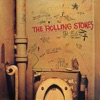
1968
The Rolling Stones, Beggars Banquet
A London band in love with Black American blues, going back to its roots; “Sympathy for the Devil” even rides a samba-like groove.
-

1969
Fairport Convention, Liege & Lief
Old English ballads played on electric instruments — widely seen as the record that established British folk rock.
-

1969
The Beatles, Abbey Road
The last album the Beatles recorded, known for the long medley on side two.
-

1970
Black Sabbath, Paranoid
Birmingham band Black Sabbath’s second album, recorded mainly at Regent Sound in London, went to No. 1 in the UK. Its heavy, distorted riffs set the template for heavy metal, and Rolling Stone named it the greatest metal album of all time in 2017.
-

1971
Led Zeppelin, Led Zeppelin IV
The album with “Stairway to Heaven,” joining hard rock’s power to the sound of English folk.
-

1971
Anne Briggs, Anne Briggs
English folk singer Anne Briggs’s first album, recorded for Topic and sung mostly unaccompanied. Bert Jansch learned “Blackwater Side” and other traditional songs from her, and Sandy Denny wrote a song in her honour.
-

1972
Nick Drake, Pink Moon
His last album, recorded with just guitar and voice in two nights. It sold little in his lifetime but came to be deeply loved.
-
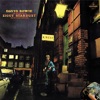
1972
David Bowie, The Rise and Fall of Ziggy Stardust and the Spiders from Mars
A concept album in which he played a rock star from outer space — the emblem of glam rock.
-

1973
Pink Floyd, The Dark Side of the Moon
Formed in Cambridge and London. A suite on madness and time, built with synths and sound effects, and one of the best-selling albums ever.
-

1974
Richard & Linda Thompson, I Want to See the Bright Lights Tonight
Guitarist Richard Thompson’s first album with his new wife Linda, cut on a £2,500 budget at Sound Techniques in Chelsea in 1973 and held back until 1974 by a vinyl shortage.
-

1975
Queen, A Night at the Opera
The London band’s album with “Bohemian Rhapsody,” packing opera and hard rock into one song.
-

1977
Sex Pistols, Never Mind the Bollocks, Here’s the Sex Pistols
The only studio album by the band that symbolised London punk, shaking British society amid recession and youthful anger.
-

1977
Elvis Costello, My Aim Is True
Elvis Costello’s debut on the independent Stiff label: in the punk year, sharp words and sure songwriting, “Alison” among them.
-

1978
Steel Pulse, Handsworth Revolution
A band of second-generation Caribbean migrants from Birmingham’s Handsworth district — a landmark of British-born roots reggae.
-

1979
Joy Division, Unknown Pleasures
A Manchester band. Producer Martin Hannett’s spacious sound opened up the dark, inward rock that followed punk.
-

1979
The Clash, London Calling
The London band’s double album mixed punk with reggae, ska, rockabilly and jazz — the many sounds of a city of migrants.
-

1979
The Specials, The Specials
The debut by The Specials, a multiracial band formed in Coventry in 1977, issued on Jerry Dammers’ 2 Tone label and produced by Elvis Costello. Jamaican ska played with punk urgency, it sat at the heart of the 2 Tone movement.
-

1979
Linton Kwesi Johnson, Forces of Victory
Dub poet Linton Kwesi Johnson’s first solo album for Island, co-produced with Dennis Bovell: his verse spoken over the reggae grooves of Bovell’s Dub Band. It reached No. 66 in the UK.
-

1979
The Slits, Cut
The Slits’ debut, built around Ari Up, Viv Albertine and Tessa Pollitt and produced by reggae man Dennis Bovell: an inventive fusion of punk and reggae that reached No. 30 in the UK on Island.
-

1979
Gang of Four, Entertainment!
The debut by Leeds band Gang of Four: Andy Gill’s sharp, angular guitar over funk-derived rhythms, with lyrics dissecting consumerism and power. A post-punk cornerstone, ranked fifth in Rolling Stone’s list of the greatest punk albums.
-

1984
Sade, Diamond Life
The debut of Nigerian-born, English-raised Sade Adu’s band, known worldwide for “Smooth Operator.”
-
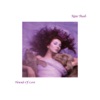
1985
Kate Bush, Hounds of Love
Made in her home studio; known for its pop first side and the suite “The Ninth Wave” on the second.
-

1986
The Smiths, The Queen Is Dead
The Manchester four-piece at their height: Morrissey’s wry lyrics and Johnny Marr’s guitar.
-

1989
Soul II Soul, Club Classics Vol. One
London sound-system collective Soul II Soul, out of Caribbean diaspora culture, changed British R&B with a heavy, swaying beat.
-

1989
The Stone Roses, The Stone Roses
The Stone Roses’ debut, produced by John Leckie and recorded mostly in London, made the band — alongside the Happy Mondays — the leading voice of Manchester’s “Madchester” sound. A slow starter, it went on to sell over four million copies worldwide.
-

1991
Massive Attack, Blue Lines
From Bristol’s Wild Bunch sound system: hip-hop, reggae and soul melted together at a slow tempo.
-

1993
Us3, Hand on the Torch
London’s Us3 built the album from Blue Note’s back catalogue; “Cantaloop,” on Herbie Hancock’s “Cantaloupe Island,” was a hit, and it is cited as Blue Note’s first US platinum album.
-

1993
Apache Indian, No Reservations
The debut of Apache Indian, raised in Handsworth, Birmingham, recorded mostly at Tuff Gong in Kingston: ragga and bhangra in English, Punjabi and patois, tackling caste and arranged marriage. “Arranged Marriage” became his UK breakthrough hit.
-
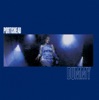
1994
Portishead, Dummy
The Bristol trio’s debut, defining trip-hop with hip-hop beats and a cinematic sound.
-

1994
Underworld, Dubnobasswithmyheadman
The first album by the reborn Underworld — Karl Hyde and Rick Smith joined by young DJ Darren Emerson — melting acid house, dub and techno in tracks such as “Dark & Long” and “Cowgirl.” Released on Junior Boy’s Own.
-

1994
The Prodigy, Music for the Jilted Generation
The Prodigy’s second album, a response both to the commercialisation of rave and to the 1994 Criminal Justice Act that criminalised it — “Their Law” said it outright. Released on XL, it topped the UK chart and was shortlisted for the Mercury Prize.
-

1995
Goldie, Timeless
An artist from Wolverhampton who combined high-speed breakbeats with orchestral sweep, making drum & bass into album art.
-

1995
Oasis, (What’s the Story) Morning Glory?
The Manchester band defined the Britpop era with songs like “Wonderwall.”
-

1995
Tricky, Maxinquaye
The solo debut of Tricky, who grew up in Knowle West, Bristol, and had worked with Massive Attack. Martina Topley-Bird sings on most tracks. It was nominated for the Mercury Prize.
-

1995
Pulp, Different Class
Pulp, formed in Sheffield in the late 1970s, were catapulted into Britpop stardom by “Common People,” Jarvis Cocker’s tale of upper-class slumming. The album went to No. 1 in the UK and won the 1996 Mercury Prize.
-

1996
Jamiroquai, Travelling Without Moving
The London band led by Jay Kay; acid jazz and funk with worldwide hits such as “Virtual Insanity.”
-

1997
Radiohead, OK Computer
The Oxford band’s portrait of unease in the information age, regarded as a defining rock album of the 1990s.
-

1998
Talvin Singh, O.K.
London-born tabla player and DJ Talvin Singh’s defining album of the Asian Underground, joining drum and bass to Indian classical music; it won the Mercury Prize.
-

1998
Asian Dub Foundation, Rafi's Revenge
Asian Dub Foundation grew out of a London music-education workshop in 1993. Here jungle beats, dub bass and sitar-like guitar carry political raps, with “Free Satpal Ram” campaigning against an injustice. Shortlisted for the Mercury Prize.
-

1999
Nitin Sawhney, Beyond Skin
Composer and guitarist Nitin Sawhney reflects on life as a British Asian, fusing Indian and Western music; the sleeve asks “Indian, what does it mean?” Released on London’s Outcaste label, it was shortlisted for the Mercury Prize.
-

2000
Radiohead, Kid A
Oxford’s Radiohead swung from guitar rock to electronic music; a Grammy winner.
-

2002
The Streets, Original Pirate Material
Mike Skinner’s project from Birmingham, telling everyday British youth life over UK garage.
-

2003
Dizzee Rascal, Boy in da Corner
An 18-year-old from Bow, East London. It brought grime — hard beats grown from garage and dancehall — to album form and won the Mercury Prize.
-

2004
Wiley, Treddin' on Thin Ice
The debut of Wiley, the Bow-raised “godfather of grime,” spreading the cold, brittle electronic beats he called “eskibeat.” It includes “Wot Do U Call It?”, mocking the many names thrown at his music.
-

2005
M.I.A., Arular
The debut of a London-born Tamil artist who spent her early childhood in Sri Lanka, mixing dancehall, Brazilian baile funk and electro.
-

2006
Amy Winehouse, Back to Black
A north London singer who sang her own pain plainly, in the sound of 1960s girl groups and soul.
-

2006
Arctic Monkeys, Whatever People Say I Am, That's What I'm Not
Sheffield band Arctic Monkeys’ debut: Alex Turner’s rapid-fire tales of local nightlife sold over 360,000 copies in its first week, then the fastest-selling debut in UK history. It won the 2006 Mercury Prize.
-
2007
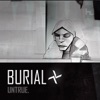
Burial, Untrue
South London’s Burial painted late-night urban loneliness with fragments of altered voices and rain-like noise.
-

2009
The Unthanks, Here's the Tender Coming
The first album under the name The Unthanks, led by sisters Rachel and Becky Unthank from the north-east of England: traditional songs in fresh arrangements, plus a song giving voice to a girl who worked in the mines in 1842. Mojo’s folk album of the year.
-

2011
Adele, 21
The second album by a singer from Tottenham in north London; with songs of heartbreak such as “Rolling in the Deep,” it was a worldwide smash.
-

2011
PJ Harvey, Let England Shake
Recorded in five weeks in Eype Church in Dorset, PJ Harvey’s meditation on the First World War, modern wars and what it means to be English. It won the 2011 Mercury Prize, making her the only artist to win it twice.
-

2014
FKA twigs, LP1
From Gloucestershire in the west of England; a debut that builds R&B and electronics from sounds as delicate as breath.
-

2016
Skepta, Konnichiwa
Nigerian-heritage London MC Skepta put grime back on top independently and won the Mercury Prize.
-

2017
Stormzy, Gang Signs & Prayer
London rapper Stormzy’s debut, released independently, edged out Rag’n’Bone Man to become the first grime album to reach No. 1 in the UK, and won British Album of the Year at the 2018 Brit Awards.
-

2018
Sons of Kemet, Your Queen Is a Reptile
Saxophonist Shabaka Hutchings’ London band, joining jazz to Caribbean carnival rhythm with tuba and two drummers.
-

2019
Dave, PSYCHODRAMA
Streatham rapper Dave’s debut, a concept album about growing up in South London framed as a series of therapy sessions. It entered the UK chart at No. 1 and won the 2019 Mercury Prize.
-

2020
Nubya Garcia, SOURCE
The debut of London tenor saxophonist Nubya Garcia, an alumna of Gary Crosby’s Tomorrow’s Warriors and a leading light of the city’s new jazz scene. It entered the UK Top 30 and was shortlisted for the 2021 Mercury Prize.
-

2021
Little Simz, Sometimes I Might Be Introvert
A north London rapper of Nigerian heritage who told her own story over orchestras and Afrobeat.
-

2022
Ezra Collective, Where I’m Meant to Be
The London band at the heart of the city’s new jazz, where Afrobeat, Caribbean music and grime meet — the first jazz act to win the Mercury Prize.
-

2022
Kokoroko, Could We Be More
The debut of Kokoroko, the London eight-piece formed in 2014 and led by trumpeter Sheila Maurice-Grey: a supple blend of Afrobeat, West African highlife and jazz, released on Gilles Peterson’s Brownswood and reaching No. 30 in the UK.
-

2023
Sampha, Lahai
A south London singer and pianist with Sierra Leonean roots, singing of life and time with a fragile voice and intricate rhythm.
-

2023
RAYE, My 21st Century Blues
RAYE’s first album, released independently — with her owning the masters — after she left Polydor, which had held back her debut. It reached No. 2 in the UK and won six Brit Awards in 2024, including British Album of the Year.
-

2025
Sam Fender, People Watching
Sam Fender’s third album opened at No. 1 in the UK with 107,100 units, the biggest first week for a British solo artist since Harry Styles in 2022; its title track was inspired by the death of his friend Annie Orwin. It won the 2025 Mercury Prize.
-

2026
Nia Archives, Emotional Junglist
Nia Archives’ second album, the follow-up to her 2024 debut Silence Is Loud, came out on Island in July 2026: a breakup record set to jungle breakbeats, charting a 2025 in which she fell in and then out of love. It was shortlisted for the 2026 Mercury Prize.
-

2026
Knats, A Great Day In Newcastle
The second album by Knats, who call their sound “Geordie jazz”, released on Gearbox: nu-jazz arrangements with spoken word from poet Cooper Robson and a punk edge, produced by Geordie Greep. It was shortlisted for the 2026 Mercury Prize.