Detroit & Chicago
Chicago · Detroit · the industrial Great Lakes
Where African Americans who moved north from the South electrified their music in factory towns: Chicago electric blues, Detroit’s Motown, garage rock — and, in the 1980s, house and techno.
A rhythm of this region: Four on the floor (house / techno)
33 recordings, 1923–2022
-

1923
King Oliver’s Creole Jazz Band, Editio Princeps
The band New Orleans cornetist King Oliver led in Chicago. Its 1923 recordings feature the young Louis Armstrong.
-

1957
Chuck Berry, After School Session
The St. Louis guitarist’s debut album on Chicago’s Chess Records. His riffs and songs about teenage life became the template for rock’n’roll.
-

1958
Jimmy Reed, I’m Jimmy Reed
Jimmy Reed’s first Vee-Jay album collects twelve sides issued as singles from 1953 to 1958, with guitarist Eddie Taylor among the backing players. It includes his first hit “You Don’t Have to Go” and “Honest I Do”, later covered on the Rolling Stones’ debut album.
-

1959
Howlin’ Wolf, Moanin’ in the Moonlight
A bluesman who moved from Mississippi to Chicago. His rasping voice and electric band carry the full force of Chicago blues.
-

1964
The Supremes, Where Did Our Love Go
A trio who grew up in Detroit’s housing projects. With songs by Motown’s Holland–Dozier–Holland team they scored hit after No. 1 hit.
-

1964
Muddy Waters, Folk Singer
Muddy Waters’s only all-acoustic album, recorded in September 1963 at Tel Mar Recording in Chicago with Buddy Guy on second guitar and Willie Dixon on bass, and released by Chess in January 1964. Rolling Stone ranked it No. 280 on its 2003 list of the 500 greatest albums.
-
1965
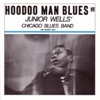
Junior Wells’ Chicago Blues Band, Hoodoo Man Blues
Harmonica man Junior Wells, with Buddy Guy on guitar, brought the sound of Chicago’s clubs straight into the studio for the city’s Delmark label.
-

1965
B.B. King, Live at the Regal
Chicago’s Regal Theater, November 1964: B.B. King trading calls with his audience — held up as the model blues live album.
-

1968
Muhal Richard Abrams, Levels and Degrees of Light
Chicago pianist Muhal Richard Abrams’s first album as a leader, recorded in Chicago in 1967 and released on Delmark. With Anthony Braxton and Leroy Jenkins in the band, it also features recited poetry and Penelope Taylor’s vocals.
-

1969
The Stooges, The Stooges
A band from Ann Arbor, near Detroit. Iggy Pop’s raw vocals and their brutal simplicity are often called a blueprint for punk.
-

1969
MC5, Kick Out the Jams
The Detroit band’s live debut; its roar and political fervour made it a forerunner of punk.
-

1970
Curtis Mayfield, Curtis
His first solo album after leaving Chicago’s Impressions. With strings and percussion, it sang of Black pride and society.
-

1971
Marvin Gaye, What’s Going On
Motown’s star singer sang of the Vietnam War, the environment and urban decay in one continuous suite — released over his label boss’s objections.
-

1971
Funkadelic, Maggot Brain
George Clinton’s Detroit band, known for the title track’s ten-minute guitar solo by Eddie Hazel.
-

1976
Stevie Wonder, Songs in the Key of Life
Born in Michigan and signed to Motown at 11. Mastering synthesizers too, he painted every corner of life across a double album.
-

1983
Cybotron, Enter
Juan Atkins and Rick Davis’s duo. Picturing industrial Detroit’s future in machine rhythms, it was a source of Detroit techno.
-

1984
Prince and The Revolution, Purple Rain
Prince’s music for the film of the same name — the peak of the Minneapolis sound that melted funk and rock.
-

1984
The Replacements, Let It Be
The Replacements’ third album, recorded with engineer Steve Fjelstad back at Blackberry Way Studios in Minneapolis, where they had made their first records, and released by local label Twin/Tone. Paul Westerberg wrote the songs.
-

1989
Mr. Fingers, Ammnesia
Chicago producer Larry Heard. Tracks like “Can You Feel It” found deep feeling in drum machines and synths — the roots of deep house.
-
1993
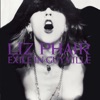
Liz Phair, Exile In Guyville
Liz Phair’s debut, recorded with Brad Wood at Idful in Chicago and released by Matador: 18 songs loosely framed as a track-by-track reply to the Rolling Stones’ Exile on Main St. Now seen as a feminist landmark, it ranked fourth on Pitchfork’s list of the best albums of the 1990s.
-

1994
Common, Resurrection
Common, then still Common Sense, recorded this album at Battery Studios in Chicago, mostly with producer No I.D. It sold only 2,000 copies in its first week and debuted at No. 179, but critics rated it highly and “I Used to Love H.E.R.” became a signature song.
-

1996
Tortoise, Millions Now Living Will Never Die
Tortoise’s second album, recorded at Idful and Soma in Chicago and released by Thrill Jockey. The nearly 21-minute “Djed” is a collage of sounds stitched together in the studio, on a record that joins post-rock with jazz fusion.
-

2000
Eminem, The Marshall Mathers LP
Eminem’s album, recorded partly at 54 Sound in Detroit, sold over 1.76 million copies in its first week, then the fastest-selling studio album by a solo artist in US history. It includes “Stan,” featuring Dido.
-

2002
Wilco, Yankee Hotel Foxtrot
The Chicago band’s album, famously rejected by their label and streamed online before its release.
-

2003
The White Stripes, Elephant
The Detroit duo recorded on vintage gear only; the riff of “Seven Nation Army” is now sung in stadiums worldwide.
-

2004
Kanye West, The College Dropout
The debut by a Chicago-raised producer. Sped-up soul samples and frank lyrics about faith and education changed hip-hop’s landscape.
-

2005
Kanye West, Late Registration
The Chicago-raised rapper-producer’s second album, made with film composer Jon Brion, bringing orchestral colour into hip-hop.
-

2005
Sufjan Stevens, Illinois
Sufjan Stevens’ album about the history and people of the state of Illinois.
-

2006
J Dilla, Donuts
The Detroit producer’s 31 short beats, finished while he was ill and released on his 32nd birthday — three days before he died.
-

2012
Chief Keef, Finally Rich
The debut album by Chief Keef, the teenager from Chicago’s South Side, on Interscope. More than half was produced by Young Chop, and it includes “I Don’t Like,” remixed by Kanye West, and “Love Sosa.” It reached No. 29 in the US.
-

2013
DJ Rashad, Double Cup
An album for London’s Hyperdub by DJ Rashad, footwork pioneer and leader of the Teklife crew. Fellow Chicagoans such as DJ Spinn feature on most tracks, and it brings in jungle breaks and trap cadences at a slower, looser pace. Rashad died the following year.
-

2016
Chance the Rapper, Coloring Book
Chicago rapper Chance the Rapper’s label-free mixtape, fusing hip-hop with gospel. It reached No. 8 in the US on streams alone and became the first streaming-only release to win a Grammy, taking Best Rap Album.
-

2022
Makaya McCraven, In These Times
Chicago-based percussionist, composer and producer Makaya McCraven spent more than seven years on this album, recording in five studios and at four live venues before assembling it in post-production at his home studio. It came out jointly on International Anthem, Nonesuch and XL.