New York
Manhattan · the Bronx · Brooklyn
A port city of migrants: the mambo and salsa built by Puerto Ricans and Cubans, the Greenwich Village folk revival, punk, disco — and hip-hop, born at block parties in the Bronx.
67 recordings, 1920–2025
-

1920
Mamie Smith, Can’t Be Satisfied – The 1920 Recordings
“Crazy Blues,” recorded in New York in 1920, was the first big-selling blues record by a Black singer, opening the market for “race records.”
-

1937
Billie Holiday, 1933 – 1937
Raised in Baltimore, she recorded through the 1930s in New York, and changed jazz singing by weighing every word.
-

1938
Benny Goodman, The Famous 1938 Carnegie Hall Jazz Concert
Benny Goodman’s band at Carnegie Hall in January 1938: jazz in the temple of classical music, with Black and white musicians on the same stage.
-

1943
Duke Ellington, Live at Carnegie Hall, Dec. 11, 1943
The Washington, D.C.-born composer and bandleader began his Carnegie Hall concerts in 1943, premiering “Black, Brown and Beige,” a suite on African American history.
-

1945
Dizzy Gillespie, Groovin’ High
The trumpeter who, with Charlie Parker and others, created bebop in New York — fast tempos and complex harmony.
-

1945
Mary Lou Williams, Zodiac Suite
A suite of the twelve signs, each dedicated to fellow musicians born under it, by the pianist-arranger who had powered Kansas City swing. An orchestral version premiered at New York’s Town Hall the same year.
-

1956
Sonny Rollins, Saxophone Colossus
The New York saxophonist’s landmark, known for the Caribbean-flavoured “St. Thomas” and for improvisations that develop their themes.
-

1956
Duke Ellington, Ellington at Newport
Newport Jazz Festival, Rhode Island, 1956: Paul Gonsalves’s 27-chorus tenor solo set the crowd alight and revived the fortunes of Duke Ellington’s orchestra.
-

1957
Thelonious Monk, Brilliant Corners
The pianist’s masterpiece of singular harmony and rhythm; the title piece was so hard it had to be edited together from several takes.
-

1957
The Weavers, The Weavers at Carnegie Hall
The Weavers, silenced by the entertainment-industry blacklist, staged a comeback concert at Carnegie Hall on Christmas Eve 1955. Vanguard released the recording in April 1957 and signed the group on the strength of it.
-

1957
Stephen Sondheim, Larry Kert, Carol Lawrence & Chita Rivera, West Side Story (Original 1957 Broadway Cast)
The original cast recording of Bernstein and Sondheim’s musical, made at Columbia’s 30th Street Studio on 29 September 1957, three days after the Winter Garden opening, and produced by Goddard Lieberson in the then-new stereo process.
-

1958
Tito Puente, Dance Mania
The New York-born Puerto Rican timbales player’s classic of the mambo era, when the Palladium Ballroom was the place to dance.
-

1959
Miles Davis, Kind of Blue
Recorded in New York over two days, the landmark of modal jazz and one of the best-selling jazz albums ever.
-

1959
Charles Mingus, Mingus Ah Um
The bassist-composer’s landmark, with “Goodbye Pork Pie Hat” for the late Lester Young and a piece satirising segregation.
-

1959
Ornette Coleman, The Shape of Jazz to Come
The Texas saxophonist’s improvisations, free of set chord changes, opened the way to free jazz. Recorded in Los Angeles; that year he began playing New York’s Five Spot.
-

1960
Miles Davis, Sketches of Spain
Gil Evans’s arrangements of Rodrigo’s Concierto de Aranjuez and Spanish folk themes, with Miles Davis’s trumpet recalling the cante of flamenco.
-

1962
Bill Evans Trio, Waltz for Debby
Live at New York’s Village Vanguard — the ideal of a piano trio as three equal voices. Bassist Scott LaFaro died in an accident eleven days later.
-

1962
Eddie Palmieri, La Perfecta
Eddie Palmieri’s 1962 debut on Alegre with his band La Perfecta, which swapped the charanga’s violins for two trombones, led by Barry Rogers, for a heavier sound. Charlie Palmieri coined the term “trombanga” in the liner notes.
-
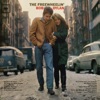
1963
Bob Dylan, The Freewheelin’ Bob Dylan
The second album by a young man from Minnesota who came to Greenwich Village. With “Blowin’ in the Wind,” it made the folk revival the voice of its time.
-

1963
James Brown, Live at the Apollo
Recorded live at the Apollo in Harlem — he paid for the recording himself against his label’s wishes, and it became a huge hit.
-

1965
John Coltrane, A Love Supreme
A four-part suite recorded in December 1964 — Coltrane’s statement of faith and a source of spiritual jazz.
-
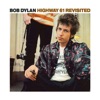
1965
Bob Dylan, Highway 61 Revisited
With an electric band and “Like a Rolling Stone,” he joined folk and rock.
-

1965
Nina Simone, I Put a Spell on You
The North Carolina-born singer-pianist, whose classical training and deep voice made jazz, blues and even chanson her own.
-

1967
The Velvet Underground & Nico, The Velvet Underground & Nico
Made under Andy Warhol’s wing. It sold little at first, but its noise and songs of the city’s underside shaped punk and alternative rock to come.
-

1967
Duke Ellington, Far East Suite
A suite by Duke Ellington and Billy Strayhorn from their 1963 State Department tour of Syria, Jordan, India, Iran and beyond — with Japan, visited the next year, in “Ad Lib on Nippon.”
-

1970
Simon & Garfunkel, Bridge over Troubled Water
The New York duo’s last studio album, with its gospel-tinged title song and the Andean “El Cóndor Pasa.”
-

1971
Fania All Stars, Live at the Cheetah, Vol. 1
The legendary concert by the stars of New York’s Fania label, which helped spread the word “salsa” around the world.
-

1971
Alice Coltrane, Journey in Satchidananda
Alice Coltrane’s harp and piano, dedicated to her teacher Swami Satchidananda: tanpura and oud join jazz in a spiritual journey toward India, with Pharoah Sanders.
-

1973
Chick Corea & Return to Forever, Light as a Feather
The second album by Chick Corea’s Return to Forever, with Brazilians Flora Purim (voice) and Airto Moreira (percussion) — home of “Spain” and other Latin-jazz classics.
-

1974
Celia Cruz & Johnny Pacheco, Celia & Johnny
A Cuban singer and a Dominican bandleader together on a Fania-family label — a snapshot of the golden age of New York’s salsa.
-

1974
Eddie Palmieri, The Sun of Latin Music
The New York pianist-bandleader’s album with teenage singer Lalo Rodríguez — the first winner of the Grammys’ new Latin category.
-

1975
Patti Smith, Horses
The New York poet-singer’s debut, joining poetry and rock — one of punk’s sources.
-

1975
Héctor Lavoe, La Voz
The first solo album by the Puerto Rican singer who made his name in New York; produced by Willie Colón, his voice became the voice of salsa.
-
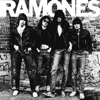
1976
Ramones, Ramones
The debut by four friends from Queens. Short, fast and simple, it was a starting point for New York punk around CBGB.
-

1977
Television, Marquee Moon
The debut of a band from the CBGB scene; its long, interlocking two-guitar playing shaped rock after punk.
-

1977
Suicide, Suicide
The debut by Alan Vega and Martin Rev’s duo Suicide, cut in four days at Ultima Sound and issued on Red Star: Rev’s minimal, repetitive electronics under Vega’s songs of urban life. Panned and uncharted in the US, it later came to be seen as a milestone of electronic and rock music.
-

1978
Chic, C’est Chic
Nile Rodgers and Bernard Edwards’ band, with “Le Freak.” Its guitar and bass grooves were disco at its peak — and later a foundation for hip-hop.
-

1978
Willie Colón & Rubén Blades, Siembra
A Bronx-raised trombonist and a singer from Panama. Its songs of city life and society made it one of the best-selling salsa albums ever.
-

1978
Tito Puente, Homenaje a Beny
The timbales king’s tribute to the great Cuban singer Beny Moré, with guest singers from the New York salsa scene carrying his songs forward.
-

1978
Steve Reich Ensemble, Reich: Music for 18 Musicians
The first recording, made in 1978 by Reich and his ensemble, of the work premiered in New York in 1976: eleven sections, each built on a single chord, carried by a pulse of pianos, marimbas, women’s voices and clarinets. Issued on ECM, until then a jazz and rock label, it reportedly sold well over 100,000 copies.
-

1978
Blondie, Parallel Lines
Blondie’s album with producer Mike Chapman, known for his hits with Sweet and Suzi Quatro. Debbie Harry and Chris Stein’s disco-tinged “Heart of Glass” went to No. 1 in the UK and elsewhere, the album topped the UK chart, and it reportedly sold some 20 million copies worldwide.
-

1980
Talking Heads, Remain in Light
Produced by Brian Eno and inspired by Fela Kuti’s Afrobeat, it builds songs on top of repeating rhythms.
-

1982
Laurie Anderson, Big Science
Performance artist Laurie Anderson’s debut, drawn from her eight-hour stage work United States. After “O Superman” unexpectedly reached No. 2 in the UK in 1981 with John Peel’s support, it became the first album of a seven-record Warner Bros. deal.
-
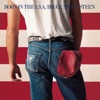
1984
Bruce Springsteen, Born in the U.S.A.
The New Jersey rocker’s album. The title song is about a Vietnam veteran’s pain, though often mistaken for an anthem; seven singles reached the US top ten.
-

1986
RUN D.M.C, Raising Hell
Run-DMC’s album produced by Russell Simmons and Rick Rubin. Rubin’s idea of covering Aerosmith’s “Walk This Way” with the band gave hip-hop its first US top-five hit, and the album is credited as the first multi-platinum rap record.
-

1986
Arthur Russell, World of Echo
The only full-length solo album cellist-composer Arthur Russell released in his lifetime: voice, cello and percussion bathed in delay and reverb. Issued by Upside, it won praise in Britain but failed commercially; in 2013 FACT named it the best album of the 1980s.
-

1988
Public Enemy, It Takes a Nation of Millions to Hold Us Back
From Long Island. Over the Bomb Squad’s wall of layered samples, it delivered sharp political messages.
-

1988
Celia Cruz & Ray Barretto, Ritmo en el Corazón
The Queen of Salsa with conguero Ray Barretto, a Grammy winner in the tropical Latin category.
-

1988
Sonic Youth, Daydream Nation
Sonic Youth’s double album, recorded over three weeks in summer 1988 at Greene St. Recording in SoHo. Co-produced by Nick Sansano, an engineer used to hip-hop sessions, it was their only release on Enigma before they moved to DGC.
-

1989
De La Soul, 3 Feet High and Rising
Long Island trio De La Soul widened hip-hop with humour and dense sampling.
-

1993
Wu-Tang Clan, Enter the Wu-Tang (36 Chambers)
The debut of nine MCs from Staten Island; RZA’s gritty samples and kung-fu film quotations remade New York hip-hop.
-

1994
Nas, Illmatic
The debut of a 20-year-old raised in the Queensbridge housing projects. Its dense, poetic portrait of home is a New York hip-hop classic.
-

1994
The Notorious B.I.G., Ready to Die
Brooklyn’s Notorious B.I.G. debut, with “Juicy” — an East Coast hip-hop classic.
-

1995
Mobb Deep, The Infamous
Havoc and Prodigy’s album as Mobb Deep. “Shook Ones, Pt. II” and “Survival of the Fittest” reached the rap top ten, and the album went gold after peaking at No. 15 in the US.
-

1996
JAY-Z, Reasonable Doubt
Jay-Z’s debut, released on Roc-A-Fella, the label he founded with Damon Dash and others, with production by DJ Premier, Ski and others and guests including Mary J. Blige and The Notorious B.I.G. It peaked at No. 23 and sold modestly at first, but was certified platinum in 2002.
-

1998
Lauryn Hill, The Miseducation of Lauryn Hill
Lauryn Hill’s only studio album, joining rap and song, reggae and soul — Grammy Album of the Year.
-

2001
The Strokes, Is This It
The Strokes’ debut announced the rock revival of the 2000s.
-

2002
Norah Jones, Come Away with Me
Norah Jones’s debut for Blue Note, made after years of singing in New York clubs — jazz, country and soul in a hush; Grammy Album of the Year.
-

2003
Yeah Yeah Yeahs, Fever to Tell
Yeah Yeah Yeahs’ debut, self-financed and recorded with TV on the Radio’s David Sitek at Headgear, a low-budget Brooklyn studio. Built around Karen O’s voice and the ballad “Maps,” it reached No. 13 in the UK and sold over 500,000 copies in the US.
-

2006
The Klezmatics, Wonder Wheel
The klezmer band set unpublished lyrics left by Woody Guthrie, born of his ties to his Jewish family in Brooklyn.
-

2007
LCD Soundsystem, Sound of Silver
James Murphy’s project; “All My Friends” put grown-up melancholy into dance music.
-

2008
Vampire Weekend, Vampire Weekend
The debut of Vampire Weekend, four friends from Columbia University, mixing baroque pop with African-inspired guitar in a style they dubbed “Upper West Side Soweto.” Released on XL, it entered the US chart at No. 17.
-

2012
Robert Glasper Experiment, Black Radio
Houston-born, New York-based pianist Robert Glasper, with Erykah Badu and others, erased the line between jazz, R&B and hip-hop.
-

2016
A Tribe Called Quest, We Got It from Here… Thank You 4 Your Service
The Queens group’s first album in 18 years and their last, including the voice of Phife Dawg, who died during the sessions.
-

2022
Samara Joy, Linger Awhile
Samara Joy, born in the Bronx in 1998 and first drawn to jazz at the borough’s Fordham High School for the Arts, made her Verve debut with standards, some sung as vocalese over famous instrumental solos. It won Best Jazz Vocal Album at the 65th Grammys, and she took Best New Artist the same night.
-

2023
billy woods & Kenny Segal, Maps
Rapper billy woods and producer Kenny Segal’s second full collaboration after 2019’s Hiding Places: a concept album about travel and being in transit, drawn from Woods’ touring in the early 2020s and released on his own Backwoodz Studioz. Pitchfork and Rolling Stone counted it among the best albums of 2023.
-

2025
Lady Gaga, MAYHEM
New York-born Lady Gaga returns to her dance-pop roots with goth and funk touches; a Grammy winner.