Horn of Africa
Ethiopia · Eritrea
Highlands with their own pentatonic modes, the qenet. Late-1960s–70s Addis Ababa had a golden age of horns and organs, rediscovered by the world decades later through the Éthiopiques series.
A rhythm of this region: Bouncing 6/8 (chik-chika)
28 recordings, 1951–2025
-

1951
Harold Courlander, Folk Music of Ethiopia
Recorded in Ethiopia and Eritrea by folklorist Harold Courlander and issued in 1951 in Folkways’ Ethnic Folkways Library: songs from Tigray and Shoa, the begena lyre, flutes and drums, and Sudanese walking songs.
-

1966
Emahoy Tsegué-Maryam Guèbrou, Éthiopiques 21: Piano Solo
An Ethiopian Orthodox nun and pianist whose compositions blend European classical music with Ethiopian melody.
-

1970
Alemayehu Eshete, Éthiopiques 9: Alèmayèhu Eshèté
Nicknamed “the Ethiopian Elvis,” he brought the drive of soul and rock’n’roll to Amharic song.
-

1972
Mulatu Astatke, Éthiopiques 4: Ethio Jazz
The founder of Ethio-jazz, who studied in London and the US and fused Ethiopian modes with jazz and Latin rhythm.
-

1972
Getatchew Mekurya, Éthiopiques, Vol. 14: Getachèw Mèkurya
Ethiopian saxophonist Getatchew Mekurya transposed shellela — the war cry sung before battle — to the saxophone. Recorded in 1970 and issued by Philips Ethiopia in 1972, his wild, wavering tone later reached free-jazz ears.
-

1974
Ali Mohammed Birra, Éthiopiques, Vol. 28: Great Oromo Music
Recordings by Ali Birra, the singer-guitarist from Dire Dawa who carried songs in the Oromo language — mostly from an LP for the Kaifa label, at a time when Amharic song dominated.
-
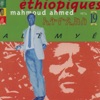
1974
Mahmoud Ahmed, Éthiopiques, Vol. 19: Mahmoud Ahmed (1974)
A volume of the Éthiopiques series collecting Mahmoud Ahmed’s 1974 recordings, sung over the Ibex Band’s twin-sax groove.
-

1975
Mahmoud Ahmed, Éthiopiques 7: Erè Mèla Mèla
A singer who came up with the Imperial Body Guard Band — one of the defining records of Ethiopian pop’s golden age.
-

1977
Hailu Mergia & The Walias, Tche Belew
The Walias Band, stars of the Addis club scene, in organ-and-horn Ethio-funk. The 2014 reissue brought Hailu Mergia back to performing.
-

1980
Various Artists, Sweet as Broken Dates: Lost Somali Tapes from the Horn of Africa
Somali cassettes and broadcast tapes that the civil war nearly destroyed: bands in Mogadishu and Hargeisa taking in funk and reggae.
-

1985
Hailu Mergia, Hailu Mergia & His Classical Instrument: Shemonmuanaye
Made while Hailu Mergia studied at Howard University after leaving the Walias Band: instrumentals layering the accordion of his youth with Moog and Rhodes, first released on cassette in Ethiopia and reissued in 2013.
-

1987
Dur-Dur Band, Dur-Dur, Vol. 5
A cassette by Dur-Dur Band, leaders of 1980s Mogadishu’s music scene: four lead singers and horns over Somali melodies with funk, disco and reggae. Reissued in 2013 as the sound of the city before the civil war.
-

1990
Aster Aweke, Kabu
An Ethiopian singer who settled in the US, bringing soulful phrasing to Amharic song and reaching both the diaspora and a world audience.
-

1991
Abdel Gadir Salim All-Stars, The Merdoum Kings Play Songs of Love
Abdel Gadir Salim, born in Dilling in Kordofan, made this for Britain’s World Circuit, an album that introduced the music of Kordofan to a wide Western audience.
-

1992
Kamal Keila, Muslims and Christians
Built from 1992 studio reels by Kamal Keila, a figure of Sudanese jazz since the mid-1960s. In English and Arabic he sings of national unity, peace between Muslims and Christians, and war orphans.
-

2001
Gigi, Gigi
An Ethiopian singer; produced by Bill Laswell, the album joins songs in Amharic to jazz and funk.
-

2005
Teddy Afro, Yasteseryal
Released just before Ethiopia’s 2005 election, Teddy Afro’s album was a huge hit even as four songs, including the title track, were banned from the airwaves as criticism of the government.
-

2009
Mulatu Astatke & The Heliocentrics, Inspiration Information 3
The father of Ethio-jazz meets the London band The Heliocentrics.
-

2014
Alsarah & The Nubatones, Silt
Khartoum-born, Brooklyn-based Alsarah’s group sing Nubian song and 1970s Sudanese pop from a migrant’s point of view.
-

2014
Ethiocolor, Ethiocolor
Debut of the 12-member ensemble based at Fendika, an azmari bet (minstrel house) in Addis Ababa: amplified masinko, krar, washint and kebero joining northern azmari song to sounds from across Ethiopia.
-

2015
Sahra Halgan, Faransiskiyo Somaliland
Somaliland singer Sahra Halgan formed this trio in exile in Lyon, playing her own songs and traditional Somali repertoire with electric guitar, ngoni and percussion; she later returned to Hargeisa.
-

2017
Meklit, When the People Move, the Music Moves Too
Addis Ababa-born, San Francisco-based Meklit joins Ethiopian modes, jazz and migrant stories.
-

2017
Teddy Afro, Ethiopia
Released while his songs were kept off state radio and TV, Teddy Afro’s album sang of Ethiopian history and unity — and went to No. 1 on Billboard’s world music chart.
-

2018
Hailu Mergia, Lala Belu
The keyboardist of 1970s Addis Ababa’s Walias Band, rediscovered while driving a cab in Washington, records anew.
-

2018
Jano Band, Lerasih New
The second album by Addis Ababa’s Jano Band, pushing Ethio-rock further: progressive-rock weight with Ethiopian scales and keyboards mimicking the masinko.
-

2018
Rophnan, Reflection
Rophnan’s debut, described as the first electronic music LP released in Ethiopia, mixing traditional music with futuristic sound. It won Album of the Year at the Leza Awards.
-

2023
Jantra, Synthesized Sudan: Astro-Nubian Electronic Jaglara Dance Sounds from the Fashaga Underground
Jantra improvises jaglara — dance music from the Fashaga borderland of Sudan, Ethiopia and Eritrea — for hours on a modified Yamaha keyboard. The album combines old cassettes with live party recordings.
-

2025
Mulatu Astatke, Mulatu Plays Mulatu
Mulatu Astatke’s first major studio album in about a decade, on Strut, revisits late-1960s and early-’70s pieces such as “Yèkèrmo Sèw”, recorded with his long-standing UK band at RAK Studios in London and with musicians from his own club in Addis Ababa.