The Levant
Lebanon · Syria · Palestine · Israel
The eastern Mediterranean shore: Aleppo’s muwashshahat, Beirut’s Fairuz and the Rahbani brothers, master oud players, Yemenite Jewish song and modern jazz — many voices crossing in a small space.
A rhythm of this region: Malfuf (2/4)
38 recordings, 1956–2025
-

1956
Shoshana Damari, With the Hed Arzi Orchestra and Choir Shoshana Damari — בליווי תזמורת הד ארצי ומקהלה
Shoshana Damari, called “the queen of Hebrew music” and best known for Moshe Wilensky’s “Kalaniot,” sings with the orchestra and choir of the Israeli label Hed Arzi.
-

1957
Various Artists, Arabic and Druse Music
Sam Eskin’s 1956 recordings in Israel of Arab and Druze music for Folkways: classical oud, Bedouin songs, elegies and wedding music, with notes on maqam and rhythmic modes by Halim El-Dabh.
-

1962
Fairuz, Gesr El Kamar (Live Operetta)
A stage recording of the Rahbani brothers’ 1962 musical play Jisr el Amar (“Bridge of the Moon”), starring Fairuz. From 1957 the Rahbanis and Fairuz appeared repeatedly at the Baalbeck festival with folk-based operettas.
-

1970
Arik Einstein & Shalom Hanoch, Shablul
Singer Arik Einstein with the young Shalom Hanoch — guitar solos and cheeky lyrics on a record often said to prove that Hebrew-language rock had come of age.
-

1975
Sabah Fakhri, Master of Andalusian Folklore: Traditional Syrian Songs
The Aleppo singer who carried on the muwashshah, classical song with Andalusian roots, with a vast voice and long improvisations.
-

1977
Sheshet, Sheshet Sheshet — ששת
The only studio album by an Israeli six-piece with Shem Tov Levi and Yehudit Ravitz, wrapping jazz-rock, Middle Eastern and Brazilian touches in gentle harmonies. It sold poorly and the band split, but it is now an Israeli rock classic.
-

1979
Fairuz, Wahdon
Lebanon’s great singer, here with music by her son Ziad Rahbani, whose jazz harmonies melt into Arabic song.
-

1980
Marcel Khalife, At the Border
The Lebanese oud player and singer, setting poems by Mahmoud Darwish and others, gave people strength through the years of civil war.
-

1980
Zohar Argov, Elinor
An early album by Zohar Argov, from a Yemenite-Jewish family. His Middle Eastern ornamented singing made it a huge seller and helped carry Mizrahi music — then kept off the radio — to the whole country.
-

1984
Ofra Haza, Yemenite Songs
The singer, raised in a Yemenite Jewish family, recorded the songs passed down at home. “Im Nin’alu” later became a worldwide hit as a dance remix.
-

1985
Ziad Rahbani, Houdou Nisbi
Composer and playwright Ziad Rahbani, Fairuz’s son, joined jazz and Arabic music in civil-war Beirut.
-

1985
Shalom Hanoch, Mechakim LaMashiach
Shalom Hanoch’s fifth solo album. Its title song, “Waiting for the Messiah,” topped a Yedioth Aharonot poll of the 500 greatest Israeli songs, and the album is counted among the classics of Israeli music.
-

1985
Mashina, Mashina
The debut of Mashina, formed by Yuval Banai and Shlomi Bracha. Hits like “Night Train to Cairo” made them one of the defining Israeli rock bands of the 1980s.
-

1987
Ehud Banai, Ehud Banai and the Refugees
Ehud Banai’s debut mixed 1980s new-wave guitar rock with Middle Eastern rhythms in protest songs full of biblical allusion — one of the most important records in Israeli rock.
-

1987
Fairuz, Maarifti Feek
Fairuz sings her son Ziad Rahbani’s songs and arrangements, recorded in war-torn Beirut in 1983–84: Eastern melody with jazz, funk and Brazilian colours.
-

1993
Berry Sakharof, Simanim Shel Hulsha
Berry Sakharof, a founding member of the Belgian post-punk band Minimal Compact, made this with Rea Mochiach — electronics and dark guitars adding new shades to Israeli rock.
-
2001
Soapkills, Bater
The self-released debut of Soapkills, the Beirut duo of (unrelated) Yasmine and Zeid Hamdan: classical Arabic song joined to electronics, dubbed “trip hop à l’orientale” in France. They became a cult name in Lebanon’s underground.
-

2002
Toufic Farroukh, Drab Zeen
Lebanese saxophonist Toufic Farroukh, based in France, recorded this in Beirut and Paris — jazz suffused with Lebanese and Arab melody and rhythm.
-

2003
Hadag Nahash, Lazuz (To Move) הדג נחש — לזוז
Hadag Nahash’s second album, made with producer Yossi Fine after a year of studio work. An immediate success, it went gold and yielded several No. 1 hits, led by the title song.
-

2006
DAM, Dedication
DAM, Palestinian rappers from Lod in Israel, pioneered Arabic rap and spoke of discrimination and resistance.
-

2007
Le Trio Joubran, Majâz
Three brothers from a family of instrument makers in Nazareth: three ouds handing melodies to one another in improvised conversation.
-

2007
Lena Chamamyan, Shamat
The second album by Damascus-based Syrian-Armenian singer Lena Chamamyan, reworking folk songs that rarely travelled beyond their own towns and neighbourhoods with a jazz sensibility, alongside her own song.
-
2008
Avishai Cohen Trio, Gently Disturbed
The Israeli bassist’s piano trio brings Middle Eastern melody and odd meters vividly into the piano-trio format.
-
2010
Ibrahim Keivo, Syrie : chants de la Djezireh (Syria : Songs of Jezireh)
The first solo album by Ibrahim Keivo from Syria’s Jezireh, home to Assyrians, Kurds, Syriacs and Armenians — songs he gathered from elders in the region’s villages.
-

2011
Dudu Tassa & The Kuwaitis, Dudu Tassa & The Kuwaitis
Israeli rocker Dudu Tassa revives the songs of his grandfather and great-uncle, the Al-Kuwaiti brothers — star musicians of Baghdad.
-

2011
Yemen Blues, Yemen Blues
The debut of Yemen Blues, formed by singer Ravid Kahalani and bassist Omer Avital, who also produced and arranged it: Yemenite music joined to funk, blues and jazz.
-
2012
Yasmine Hamdan, Ya Nass
Beirut-born Yasmine Hamdan sings in Arabic dialects from across the region, old song shimmering inside electronics.
-

2012
El Morabba3, El Morabba3 (The Square) El Morabba3 — المربع
The debut by El Morabba3 from Amman, Jordan: post-rock energy and socially conscious Arabic lyrics that won them wide popularity across the region.
-
2013
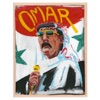
Omar Souleyman, Wenu Wenu
A wedding singer from north-eastern Syria singing over racing keyboards and dabke rhythm; this Four Tet-produced album made his name abroad.
-

2013
Mashrou’ Leila, Raasük
A Beirut band singing frankly about society and love in Arabic, with a large following among young people across the Arab world.
-

2013
Rim Banna, Revelation of Ecstasy and Rebellion
Released on the second anniversary of the Arab Spring, Rim Banna sets classical Arabic poetry by Ibn al-Farid, Mahmoud Darwish and others, produced and arranged by Bugge Wesseltoft.
-

2014
Ester Rada, Ester Rada
Ethiopian-Israeli singer Ester Rada’s first full album mixes Ethio-jazz, funk, soul and R&B, including an Amharic cover of “Nanu Ney,” the song popularized by Muluken Melesse.
-

2016
A-WA, Habib Galbi
The Haim sisters of A-WA sing their Yemeni-Jewish grandmother’s songs over hip-hop and electronics.
-

2018
Pinhas and Sons, About an Album פנחס ובניו — מדובר באלבום
Ofer Pinhas’s large Israeli band, melting Levantine folk music into progressive rock and singing in Arabic as well as Hebrew.
-

2018
47Soul, Balfron Promise
Formed in Amman in 2013 by four musicians of Palestinian origin, 47Soul fuse Levantine dabke with dubstep — “shamstep” — singing about gentrification evictions in London and the troubles of the Middle East.
-
2021
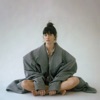
Noga Erez, KIDS
The Israeli singer-producer’s second album, using sharp rap and electronics to sing of violence and social unease.
-
2024
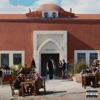
Saint Levant, DEIRA
Saint Levant’s debut takes its name from the Al Deira Hotel in Gaza, which his father designed and ran from 2001 until Israeli bombing destroyed it in late 2023. Sung in English, Arabic and French; the title track was inspired by Algerian chaâbi.
-

2025
Yasmine Hamdan, I remember I forget
Yasmine Hamdan, who formed Soapkills with Zeid Hamdan in the late 1990s, made her third solo album with co-producer Marc Collin of Nouvelle Vague and mixer Nicolás Jaar. She has said her bond with Lebanon, and what has happened to it, was where the writing began.