Egypt
Cairo · Alexandria · Nubia
The centre of 20th-century Arab music: the long songs of Umm Kulthum and film music reached the whole Arab world by radio, while Cairo’s streets gave rise to shaabi and, later, electronic mahraganat.
A rhythm of this region: Maqsum (4/4)
30 recordings, 1926–2026
-

1926
Umm Kulthum, L'Astre d'Orient, 1926-1937
Frémeaux & Associés’ three-disc set of Umm Kulthum’s earliest records, from her first Gramophone contract in 1926 through 1937, selected by Jean-Baptiste Mersiol. “L’Astre d’Orient” — the Star of the East — was one of her nicknames.
-

1939
Asmahan, Le cœur a ses raisons (1935-1944)
Nine recordings from 1935–44 by Asmahan, born into the Druze al-Atrash family of Syria, who became a singer and film actress in Cairo, singing songs by al-Qasabgi, Zakariyya Ahmad and her brother Farid al-Atrash. She died in a car crash in July 1944.
-

1940
Mohamed Abdel Wahab, Mohamed Abd El Wahab
A defining composer and singer of 20th-century Arab music who brought Western orchestras and rhythms into new songs and film music built on Arab modes.
-

1958
Abdel Halim Hafez, Aghany Film Shareaa El Hop El Banat We El Saef
Songs from two films starring Abdel Halim Hafez, Love Street (1958) and The Girls and the Summer (1960). His film career began in 1955 with Lahn el wafaa, and he founded the production company Sawt al-Fann with composer Mohamed Abdel Wahab.
-

1962
Farid al-Atrash, Aghani film Resala Men Emraa Maghola
Songs from Salah Abu Seif’s 1962 film of Stefan Zweig’s Letter from an Unknown Woman, composed and sung by its star, Farid al-Atrash, opposite Lobna Abdel Aziz.
-

1964
Umm Kulthum, Anta Oumri
“The Star of the East,” whose hour-long songs held audiences spellbound. “Enta Omri,” her first collaboration with Mohamed Abdel Wahab, premiered in 1964.
-

1970
Abdel Halim Hafez, Abd El Halim Hafez
The “Dark Nightingale,” singer and film star, beloved by young audiences across the Arab world from the 1950s to the 70s.
-

1971
Hamza El Din, Escalay: The Water Wheel
A Nubian musician whose homeland was flooded by the Aswan High Dam; with oud and voice he quietly sang the memory of a village of water wheels.
-

1975
Omar Khorshid, Omar Khorshed Pt. 2
A Cairo guitarist who played Arab modes on electric guitar; he also played in Umm Kulthum’s orchestra and created a guitar-led Arab music of his own.
-

1980
Ahmed Adaweyah, Zahma
The voice of Cairo shaabi, singing city life in everyday language; his music spread explosively on cassette.
-

1981
Mohamed Mounir, Shababeek
Born in a Nubian village near Aswan later drowned by the High Dam, Mohamed Mounir moved to Cairo. His third album set songs by Nubian singer Ahmed Mounib to Western instruments with jazz musician Yehia Khalil, and remade Egyptian pop.
-

1983
Hamid El Shaeri, The Slam! Years: 1983 - 1988
Hamid El Shaeri, born to Libyan and Egyptian parents, spent the late 1970s in London before moving to Cairo. Habibi Funk gathered his early synth-driven pop for Cairo’s SLAM! label, previously only on cassette.
-

1988
Ali Hassan Kuban, From Nubia to Cairo
Nubian singer Ali Hassan Kuban, based in Cairo, released this on Germany’s Piranha label, material that had first circulated on two cassettes. Piranha remastered it from the original tapes for a 2018 reissue.
-

1996
Amr Diab, Nour El Ain
The Egyptian pop star’s title song became a hit across the Arab world and beyond — a landmark of Mediterranean-styled Arab pop.
-

2000
Amr Diab, Tamally Maak
Amr Diab’s album; its title song became one of the most widely sung love songs in the Arab world.
-

2002
Hakim, Talakeek
An album by Hakim, a leading voice of Egyptian shaabi, who brought bass guitar and keyboards into the street-pop style. Its duet with Puerto Rican star Olga Tañón, “Ah Ya Albi,” became a hit.
-

2003
Sherine, Garh Tany
Sherine’s first solo album, following a joint release with Tamer Hosny. A commercial success, it includes the enduring hit “Sabri Aleel” and announced a new generation of Egyptian pop voices.
-

2005
Mohamed Mounir, Embareh... Kan Omri Eshreen
Listed in Mohamed Mounir’s official discography as his 19th album; the title means “Yesterday I Was Twenty.” It came between “Hawadet” (2004) and “Ta’m El Beyout” (2008).
-

2006
El Tanbura, Between the Desert and the Sea
The second album by El Tanbura, formed in Port Said in the late 1980s by Zakaria Ibrahim, carrying the port city’s songs built around the simsimiyya lyre. Songlines named it one of the top 50 world music albums of all time.
-
2007
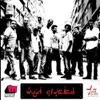
Wust El Balad, Wust el Balad
The debut of Wust El Balad (“Downtown”), formed in Cairo in 1999: oud and guitars, Arabic melody with rock and reggae — forerunners of the city’s 2000s independent scene.
-

2009
Mustafa Said & Asil Ensemble, Asil
From the Asil Ensemble, founded in 2003 by Egyptian oud player and singer Mustafa Said, which composes new music within the forms of Arabic classical tradition.
-

2011
Hamza Namira, Insan
Egyptian singer Hamza Namira’s second album came out months after Mubarak stepped down; its open support for the uprising made it an instant hit with young Egyptians.
-

2014
Dina El Wedidi, Turning Back
Cairo singer Dina El Wedidi’s debut reworks folk song for today, with the Upper Egyptian reed pipe arghul and the zar singers of Mazaher; Gilberto Gil guests on one track.
-

2015
Maryam Saleh & Zeid Hamdan, Halawella
Cairo singer Maryam Saleh and Beirut producer Zeid Hamdan renew the tradition of protest song — Sheikh Imam’s among them — with electronics.
-

2017
Nadah El Shazly, Ahwar
Egyptian singer Nadah El Shazly’s debut, made over two years between Egypt and Canada with co-composers Maurice Louca and Sam Shalabi. It joins Egyptian song to experimental sound, including an abstract cover of Sayed Darwish.
-

2018
Massar Egbari, El Album
The third album by Massar Egbari, launched in Alexandria in 2005: rock, jazz and blues with Arabic melody, everyday life in Egyptian colloquial — titled after fans’ endless “where’s the album?”
-

2019
Maurice Louca, Elephantine
Cairo composer-guitarist Maurice Louca’s large-ensemble work, improvising on Egyptian rhythms and Arab modes.
-

2019
Cairokee, The Ugly Ducklings
An album by the Cairo rock band who became known for the songs they sang during the 2011 Egyptian revolution.
-

2022
Cairokee, Roma
Egyptian band Cairokee moved away from the political songs of their earlier records toward a more personal, introspective sound, with titles like “James Dean,” “Costa Rica” and “Tarantino.” Spotify named it Egypt’s album of the year for 2022.
-

2026
Maryam Saleh, Syrr
Egyptian singer Maryam Saleh’s first solo body of work since the 2017 collective album Lekhfa, released by Simsara in March 2026. Written over three years with her mentor Kamilya Jubran and co-produced with Maurice Louca, it draws on Egyptian and Arabic forms such as taqtuqa, mawwal and muwashshah.