Russia
Moscow · St Petersburg · the Volga
Russian folk song — Volga boatmen’s songs, village polyphony — Soviet choirs and popular song, and the “bards” who sang with a single guitar. In 1980s Leningrad a new generation emerged from the Rock Club.
30 recordings, 1925–2021
-

1925
Feodor Chaliapin, Russian Folk Songs
The legendary Russian bass whose recordings of songs like “The Volga Boatmen” shaped the world’s idea of Russian folk song.
-

1942
Lidia Ruslanova, Kolkhoznaya polka (1938–1947)
A singer from the Volga region who sang village songs with great force, performing at the front for soldiers during the Second World War.
-

1961
Evgeny Mravinsky & Leningrad Philharmonic Orchestra, Tchaikovsky: Symphonies Nos. 4, 5 & 6 - "Pathetique"
Evgeny Mravinsky and the Leningrad Philharmonic recorded Tchaikovsky’s last three symphonies for Deutsche Grammophon on their autumn 1960 Western tour: the Fourth at Wembley Town Hall in London, the Fifth and Sixth at Vienna’s Musikverein.
-
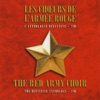
1965
Alexandrov Ensemble, The Definitive Anthology
The Soviet army’s song and dance ensemble. Its male choir’s “Kalinka,” army songs and folk songs were the Soviet Union’s musical face abroad.
-
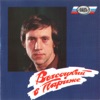
1977
Vladimir Vysotsky, Vysotsky v Parizhe (Vysotsky in Paris)
An actor and singer. His rasping songs of war, ordinary lives and the camps were known nationwide on tape, though few official records appeared.
-

1981
Sergey Kuryokhin, The Ways of Freedom Сергей Курёхин — The Ways of Freedom
Solo piano improvisations Sergey Kuryokhin recorded in Leningrad in 1981, also issued by Leo Records, the British label that carried Soviet underground music to the West. The Penguin Guide to Jazz likened his technique to Art Tatum’s.
-

1983
Aquarium, Radio Africa Аквариум — Радио Африка
Boris Grebenshchikov’s band. When there was no way to release records officially, their unofficial recordings spread as tapes copied from hand to hand.
-
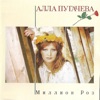
1983
Alla Pugacheva, Million Roses Алла Пугачёва — Миллион роз
The Soviet Union’s best-loved pop singer. The title song, “A Million Roses,” began as a Latvian song and was later sung in Japan too.
-

1985
Bulat Okudzhava, Voennye pesni (War Songs)
A Moscow-raised poet whose personal songs with guitar spread on copied tapes — a pioneer of the Soviet “bards.”
-

1986
Nautilus Pompilius, Razluka Наутилус Помпилиус — Разлука
Recorded by Sverdlovsk’s Nautilus Pompilius in a basement in the city in summer 1986. Named after the Russian folk song it includes, it made the band famous across the Soviet Union.
-

1987
Alisa, Blok ada Алиса — Блок Ада
The second album by Alisa, the band led by Konstantin Kinchev after his move from Moscow to Leningrad. It includes the later anthem “Krasnoe na chyornom” (Red on Black) and showed Kinchev was equal to leading the group.
-
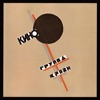
1988
Kino, Gruppa krovi (Blood Type) Kino — Группа крови
Viktor Tsoi’s band from the Leningrad Rock Club. It captured perestroika-era youth, and its songs live on after Tsoi’s death in a 1990 car crash.
-

1989
Grazhdanskaya Oborona, Russkoe pole eksperimentov Гражданская Оборона — Русское поле экспериментов
Recorded May–September 1989 at Yegor Letov’s home in Omsk, with Kuzya UO (Konstantin Ryabinov) and Yanka Dyagileva taking part — a record Letov himself named among his best.
-

1989
Zvuki Mu, Zvuki MU Звуки Му — Zvuki MU
Pyotr Mamonov’s Moscow band Zvuki Mu, produced by Brian Eno: recorded in twelve days in November 1988 at a rented Gosteleradio studio in Moscow, mixed at AIR in London, and released internationally on Opal/Land.
-
1989
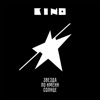
Kino, Zvezda po imeni Solntse Кино — Звезда по имени Солнце
Recorded by Viktor Tsoi’s Kino at singer Valery Leontiev’s Moscow studio over the winter of 1988–89. It spread on cassette and was the last album released in Tsoi’s lifetime; its first official LP came only in 1993.
-

1991
The Dmitri Pokrovsky Ensemble, The Wild Field
A Moscow ensemble that learned the rough, polyphonic singing still found in villages — unlike the polished folk choirs of Soviet times.
-
1993
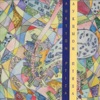
Auktyon, Ptitsa Аукцыон — Птица
The sixth studio album by Auktyon, the band of Leonid Fyodorov and Oleg Garkusha. Recorded in Moscow in autumn 1993 and first pressed in just 3,500 copies, it was the record that widened the band’s following.
-

1994
DDT, Eto vsyo (That’s All) ДДТ — Это всё
Yuri Shevchuk’s band DDT; the title song became an emblem of post-Soviet Russian rock.
-

1997
Mumiy Troll, Morskaya Мумий Тролль — Морская
The breakthrough of a band from Vladivostok; light, playful songs sprinkled with English brought fresh air to post-Soviet rock.
-

1998
Splean, Granatovy albom Сплин — Гранатовый альбом
Released in spring 1998 by Alexander Vasilyev’s St Petersburg band Splean; the hits “Orbit bez sakhara” and “Vykhoda net” carried them from clubs to stadiums.
-

1999
Zemfira, Zemfira
A singer-songwriter from Ufa whose debut came to stand for post-Soviet rock’s new generation.
-
1999
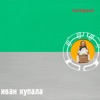
Ivan Kupala, Kostroma Иван Купала — Кострома
The debut of St Petersburg trio Ivan Kupala, who rebuilt field recordings of Russian folk songs as electronic tracks; the group won the Ovation award for folk group of the year in 1999 and 2000.
-
2002
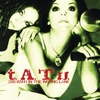
t.A.T.u., 200 km/h in the Wrong Lane
The Moscow duo re-recorded their Russian debut in English; “All the Things She Said” went to No. 1 in the UK — an unprecedented global hit for Russian pop.
-

2002
Kasta, Gromche vody, vyshe travy Каста — Громче воды, выше травы
The debut of Rostov-on-Don hip-hop group Kasta. Released in spring 2002, it sold around 100,000 copies and appears on Rap.ru’s lists of the most important Russian rap albums.
-
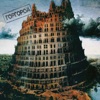
2015
Oxxxymiron, Gorgorod
Oxxxymiron’s concept album: eleven tracks telling the story of the writer Mark in a fictional dystopian city, Gorgorod. Dropped unannounced on VKontakte in November 2015, it became one of the year’s big musical events in Russia.
-

2018
Monetochka, Colouring Book for Adults Монеточка — Раскраски для взрослых
Monetochka from Yekaterinburg, whose wry, melancholy pop became a voice of her generation.
-

2019
Shortparis, Tak zakalyalas stal
The third album by Shortparis, formed in St Petersburg in 2012. Released in November 2019 with “Strashno” and “Styd,” it opens with an extract from the Communist Manifesto and was framed by the band as a move from glossy pop forms toward protest.
-

2020
IC3PEAK, Do svidaniya (Goodbye)
Moscow duo IC3PEAK sing their dissent against state and violence in dark electronics and screams; their concerts have been obstructed.
-

2021
Zemfira, Borderline Земфира — бордерлайн
Zemfira’s seventh studio album and her first in eight years, released in February 2021. The title refers to borderline personality disorder, and the lyrics speak openly of mental instability; its twelve songs include the earlier singles “Остин” and “Крым.”
-

2021
Shortparis, Yablonny sad (The Apple Orchard) Shortparis — Яблонный сад
Shortparis’s fourth album, sung by Nikolai Komyagin, is structurally more complex than its predecessor, with near-Gregorian chanting. Novaya Gazeta noted its mix of aesthetic refinement and grim reality; the title song was re-recorded with a veterans’ choir in 2022.