The Maghreb
Morocco · Algeria · Tunisia
North-west Africa, where Arab, Berber (Amazigh) and Andalusian memories overlap: Algiers chaâbi, Oran raï, Gnawa ritual music — carried by emigrants to Paris and Marseille.
32 recordings, 1932–2024
-

1932
Mohamed Ben Hassan & Mohamed Cherif, Malouf Tunisien : Congres du Caire 1932 (Live)
Malouf, Tunisian classical music, by the troupe Tunisia sent to the 1932 Cairo Congress of Arab Music, including Mohamed Ben Hassan and Mohamed Cherif; issued in Paris in 1994. The congress is credited with inspiring the founding of the Rachidia institute in 1934.
-

1932
Ensemble de al-Hajj al-Arabi ibn Sari, Congrès Du Caire 1932, Vol. 2 (REMASTERED 2024)
Nuba from the urban tradition of Tlemcen in western Algeria, recorded at the 1932 Cairo Congress of Arab Music by the ensemble of Sheikh Larbi Bensari (Ibn Sari). It is the second volume of the 1988 Bibliothèque nationale / Institut du monde arabe CDs.
-

1959
Paul Bowles, Music of Morocco: Recorded by Paul Bowles, 1959
American writer Paul Bowles travelled across Morocco from July to December 1959 recording traditional music for the Library of Congress. Expanded from a 1972 double LP, Dust-to-Digital’s 2016 release was nominated for a Grammy for Best Historical Album.
-

1973
Dahmane El Harrachi, Le Chaâbi, Vol. 2
An Algiers chaâbi singer who himself lived in France. His “Ya Rayah” (1973), about those who leave home to work abroad, has been sung across North Africa and France ever since.
-
1976
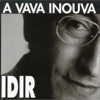
Idir, A Vava Inouva
Early songs by Idir from Algeria’s Kabylie. The title track, a grandmother’s fireside tale sung in Tamazight over plain guitar, travelled the world and was translated into many languages.
-

1988
Chaba Fadela, You Are Mine
Chaba Fadela’s debut, recorded in Algeria with producer Rachid Baba Ahmed mixing derbouka and synthesizers. The title track is “N’sel Fik,” her duet with husband Cheb Sahraoui and an international raï hit.
-
1990
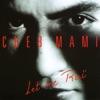
Cheb Mami, Let Me Raï
Cheb Mami, the “Prince of Raï” from Saïda in western Algeria, recorded this in Los Angeles with Johnny Clegg’s producer Hilton Rosenthal, bringing Oran’s raï closer to international pop.
-

1991
Anouar Brahem, Barzakh
The Tunisian oud player’s first ECM album: Arab classical modes and improvisation as quiet chamber music.
-

1991
Najat Aatabou, The Voice of the Atlas
The international debut of Najat Aatabou from Khemisset in central Morocco, whose teenage song “J’en ai marre,” secretly taped at a party, spread across the country on cassette — women’s plain truths over Berber rhythms.
-

1992
Mahmoud Guinia, Musique Tagnawite
A master of Moroccan Gnawa: the bass lute guembri and iron qraqeb castanets drive the all-night healing ceremony.
-
1992
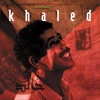
Khaled, Khaled
Khaled’s international breakthrough, produced by Michael Brook and Don Was. Its single “Didi” became the first song in Algerian Arabic to chart in France, peaking at No. 9.
-

1993
Khaled, N’ssi N’ssi
The “King of Raï” from Oran in western Algeria, whose raï with synths and horns won huge audiences in France and the Arab world.
-
1993
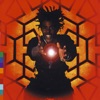
Hassan Hakmoun & Zahar, Trance
Moroccan gnawa musician Hassan Hakmoun with his band Zahar, recorded at Peter Gabriel’s Real World Studios: the three-string sintir bass set against Egyptian percussion.
-
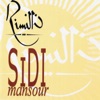
1994
Cheikha Rimitti, Sidi Mansour
The “mother of raï,” recording since the 1950s and singing women’s lives with candour. Robert Fripp and Flea appear on this album.
-

1994
Matoub Lounès, Kenza
Matoub Lounès sang for Kabyle culture and free speech. The title song is dedicated to the daughter of murdered writer Tahar Djaout; the same year he was himself kidnapped by an armed group, and he was assassinated in 1998.
-
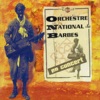
1997
Orchestre National de Barbès, En Concert
The debut of the orchestra gathered around bassist Youcef Boukella in Barbès, Paris’s North African quarter — a live recording mixing raï, gnawa, chaabi and rock, the festive sound of an immigrant neighbourhood.
-
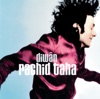
1998
Rachid Taha, Diwân
Born in Algeria and raised in France, he re-sang North African classics with a rock sensibility, carrying tradition from an emigrant’s point of view.
-
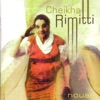
2000
Cheikha Rimitti, Nouar
A late album by Cheikha Rimitti, a founding voice of raï, one of the most influential singers in the development of the style; it was reissued as a classic in 2006.
-
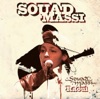
2001
Souad Massi, Raoui
The Algiers-born singer weaves songs in Arabic and French with echoes of folk, chaâbi and flamenco.
-

2001
Dhafer Youssef, Electric Sufi
Tunisian oud player and singer Dhafer Youssef joins Sufi singing and oud to electronics and jazz.
-

2001
Karim Ziad, Ifrikya
Drummer Karim Ziad’s album for ACT, recorded in Paris in 2000, setting gnawa singers alongside jazz players including guitarist Nguyên Lê. The title refers to a united Africa.
-

2003
Souad Massi, Deb
Souad Massi’s “heartbroken” album, with lyrics more personal than political, moving between Arabic melody, Andalusian flamenco and folk. It became one of the most widely heard North African albums.
-

2004
Rachid Taha, Tékitoi
The Lyon-raised Algerian singer, who re-sang The Clash’s “Rock the Casbah” in Arabic, joining Arab music to punk.
-

2005
Hoba Hoba Spirit, Blad Skizo
The second album by Casablanca’s Hoba Hoba Spirit: what they call “hayha music,” rock and reggae mixed with homegrown Moroccan roots, needling Moroccan society in Darija.
-

2006
Don Bigg, Mgharba Tal Moute
Casablanca rapper Don Bigg’s first solo album: 24 tracks in Darija taking on taboo subjects such as the Years of Lead and freedom of expression, and a voice for a generation of Moroccan rap.
-

2009
Anouar Brahem, The Astounding Eyes of Rita
Tunisian oud player Anouar Brahem’s quartet with bass clarinet, bass and darbouka, dedicated to the memory of Palestinian poet Mahmoud Darwish — Arabic modes unfolding like quiet chamber music.
-

2010
Hindi Zahra, Handmade
The debut of Moroccan-born, Paris-based singer Hindi Zahra, singing folk, blues and jazz in English and Amazigh (Berber).
-

2012
Emel, Kelmti Horra
Emel Mathlouthi’s debut. Its title song, “My Word Is Free,” was sung in the streets during Tunisia’s 2010–11 revolution and became a protest anthem; folk and electronics behind a commanding voice.
-
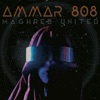
2018
Ammar 808, Maghreb United
Tunisian producer Ammar 808 brings together singers from Tunisia, Algeria and Morocco, joining Maghrebi traditions with electronics.
-

2020
Bab L’Bluz, Nayda!
A band between Marrakech and Lyon, playing Maghrebi music as psychedelic rock on instruments derived from the Gnawa guembri.
-
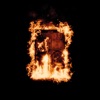
2023
ElGrandeToto, 27
The second album by Casablanca’s ElGrandeToto, Morocco’s most-streamed artist — titled for his age and the date his family home burned. Rapped in Darija, it debuted at No. 3 on Spotify’s global album-debut chart.
-
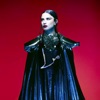
2024
Emel, MRA
Tunisian singer Emel released this on her own Little Human label. Every contributor, from producers to guests and players, is a woman, and the title plays on the Arabic word for woman. The music mixes African trap, batucada, Arabic reggaeton, hip-hop and drum and bass.