Korea
Seoul · Jeolla · Busan
Pansori — epic stories told by one singer and a drummer — trot, 1960s–70s psychedelic rock, and in the 21st century, new meetings between gugak (traditional music) and contemporary sound.
34 recordings, 1951–2026
-

1951
Various Artists, Folk & Classical Music of Korea
Folkways’ survey of Korean music, ranging from farmers’ songs and folk ballads to the formal a-ak court music, with notes by Kyung Ho Park, who writes of the melancholy a hard history left in it.
-

1970
Shin Joong Hyun, Beautiful Rivers and Mountains
The godfather of Korean rock, who honed his craft in US Army base clubs and created Korean-language psychedelic rock.
-

1970
Pearl Sisters, Pearl Sisters Hit Collection 펄시스터즈 — 펄시스터즈 히트전집
A duo of twin sisters who debuted in the late 1960s with Shin Joong Hyun’s “Nima,” pioneers of Korean girl-group pop.
-
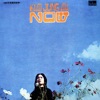
1973
Kim Jung Mi, Now
Produced by Shin Joong Hyun: Kim Jung Mi’s psychedelic folk album evoking Korean landscapes.
-

1977
Sanullim, Sanullim Vol. 1
The debut of the three Kim brothers’ band: garage-rock urgency and Korean poetry, a source for later Korean indie.
-

1978
Hwang Byungki, Chimhyangmu 황병기 — 침향무
Works by gayageum player and composer Hwang Byungki. The title piece (composed 1974), inspired by Silla-era Buddhist art and contact with Central Asia, broke with tradition in three movements and is now a staple for every gayageum player.
-

1980
Cho Yong-pil, Cho Yong-pil 1 조용필 — 조용필 1집
The first album by Cho Yong-pil, Korea’s “king of song,” with “The Woman Outside the Window” and “Come Back to Busan Port” — said to be the nation’s first million-selling album.
-

1985
Deulgukhwa, Deulgukhwa (March) 들국화 — 들국화
The debut of Deulgukhwa, known for Jeon In-kwon’s raw, screaming vocals. Despite little radio play it sold hugely, and topped the Kyunghyang Shinmun’s 2007 list of the 100 greatest Korean popular music albums.
-

1987
Yoo Jae-ha, Because I Love You 유재하 — 사랑하기 때문에
The only album by Yoo Jae-ha, who died in a car crash at 25 within months of its release. Little noticed at first, it grew in stature after his death and reshaped the Korean ballad.
-

1988
Kim Duk Soo SamulNori, SamulNori 김덕수 사물놀이 — 사물놀이
Founded in 1978 by Kim Duk Soo and others, the group turned the four percussion instruments of village farmers’ music into a new stage art: samul nori.
-

1991
Kim Hyun-sik, Kim Hyun-sik Vol. 6 김현식 — 김현식 Vol.6
The sixth and final album by Kim Hyun-sik, the husky, emotional voice of the 1980s, released after his death in 1990; its lead song “My Love by My Side” is still widely sung.
-

1992
Seotaiji and Boys, Seotaiji and Boys
The debut by the group that brought rap and dance into Korean pop, transforming it — often cited as a starting point of K-pop.
-
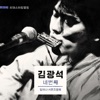
1994
Kim Kwang-seok, Kim Kwang-seok 4 김광석 — 김광석 4집
Folk singer Kim Kwang-seok’s fourth album, with “Around Thirty” — still among Korea’s most loved songs long after his early death in 1996.
-

2008
Onnine Ibalgwan, Most Ordinary Existence 언니네 이발관 — 가장 보통의 존재
The fifth album by Seoul’s Onnine Ibalgwan (Sister’s Barbershop), postponed five times in the making; it won Album of the Year at the Korean Music Awards and is counted among the finest Korean rock records.
-

2008
The Black Skirts, 201 검정치마 — 201
The debut of The Black Skirts, the solo project of US-raised Cho Hyu-il. Emerging from Seoul’s Hongdae clubs, its quirky lyrics and catchy pop-rock made it a new face of Korean indie.
-

2011
Kiha & The Faces, Kiha & The Faces
Jang Kiha and the Faces renewed 1970s Korean rock and pop with deadpan, half-spoken singing.
-

2016
Jambinai, A Hermitage
A Seoul band combining the traditional haegeum, piri and geomungo with the roar of post-rock and metal.
-

2016
BIGBANG, MADE
BIGBANG’s third Korean-language album, gathering singles such as “Loser” and “Bae Bae,” debuted at No. 1 on Billboard’s World Albums chart.
-

2016
Black String, Mask Dance
The first ACT album by Black String, led by geomungo player Yoon Jeong Heo, joining Korean tradition and jazz with daegeum, janggu and electric guitar. The group won a Songlines Music Award in 2018.
-

2016
Lang Lee, Playing God 이랑 — 신의 놀이
Lang Lee’s second album, produced by Kim Kyeongmo of Sunkyeol. The title track won Best Folk Song at the 2017 Korean Music Awards, where she famously auctioned off her trophy on stage.
-
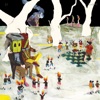
2017
HYUKOH, 23
The Seoul band HYUKOH sang a young generation’s weariness and freedom and took Korean indie across Asia.
-

2017
IU, Palette
IU wrote much of this album herself, reflecting on turning twenty-five — widening what a Korean pop singer-songwriter could be.
-

2018
Jang Pill Soon, Soony Eight: Sogil 장필순 — soony eight : sogil花
Folk singer Jang Pill Soon, active since the 1980s, made this album after moving to Sogil on Jeju Island — Korean Music Awards Album of the Year.
-

2019
Yerin Baek, Every letter I sent you. 백예린 — Every letter I sent you.
Yerin Baek’s first full-length album, a double on her own label: songs of diary-like intimacy in a soft voice, winner of Best Pop Album at the Korean Music Awards.
-

2020
Leenalchi, Sugungga
The pansori classic “Sugungga” sung over a funk band of two basses and drums — traditional storytelling turned into new dance music.
-

2020
BTS, MAP OF THE SOUL : 7
A seven-member group from Seoul who topped charts across the English-speaking world and made K-pop a global phenomenon.
-

2020
Jeongmilla, CheongPa Sonata
A Seoul singer-songwriter’s folk portrait of city life around Cheongpa, near Seoul Station — Korean Music Awards Album of the Year.
-

2020
SE SO NEON, Nonadaptation
Se So Neon, built around Hwang So-yoon’s guitar and voice, plays raw, unadorned guitar rock; Pitchfork named it one of 2020’s best rock albums.
-

2022
250, PPONG
Producer 250 rebuilds ppongjjak — old Korean trot — as electronic music; Korean Music Awards Album of the Year.
-

2023
NewJeans, Get Up
A five-member Seoul group whose airy pop, drawing on 1990s R&B and Jersey club, came to define a new generation of K-pop.
-

2023
Silica Gel, POWER ANDRE 99
From Seoul band Silica Gel, weaving electronics into intricately built guitar rock; it was nominated for Album of the Year at the Korean Music Awards.
-

2024
Danpyunsun and the Moments Ensemble, Hail to the Music
An ensemble led by singer-songwriter Danpyunsun — Korean Music Awards Album of the Year.
-

2025
Chudahye Chagis, SOSUMINJOK
Singer Chu Dahye’s band starts from the songs of Korean shamanic rites (gut) and sets them to funk and reggae grooves — Korean Music Awards Album of the Year.
-

2026
BTS, ARIRANG
BTS’s first release after the members completed their military service, issued by BigHit Music in March 2026. It entered the Billboard 200 at No. 1 and held the top spot for three weeks, topped Oricon’s first-half album ranking in Japan, and by October was the most-streamed 2026 album on Spotify.