The Celtic Fringe
Ireland · Scotland · Brittany
Dance tunes and songs on fiddle, uilleann pipes and harp. The music travelled to North America with emigrants and found a world audience in the late-20th-century folk revival.
A rhythm of this region: Jig (6/8)
36 recordings, 1927–2025
-

1927
Michael Coleman, Ceoltóir Mórthionchair na hAoise
A fiddler from Sligo whose records, made in New York, travelled back to Ireland and profoundly influenced playing styles there.
-

1956
Jeannie Robertson, Songs of a Scots Tinker Lady
Aberdeen ballad singer Jeannie Robertson, recorded at her home in 1955 and edited by Kenneth S. Goldstein for Riverside, with Josh MacRae’s guitar on several tracks. Songs include “The Four Marys” and “The Gypsy Laddies.”
-

1963
Joe Heaney, Irish Traditional Songs in Gaelic & English
Joe Heaney sings eleven traditional songs in Irish and English on this Topic LP, recorded by Bill Leader with notes by A.L. Lloyd. It made a considerable impact on English audiences who had discovered Irish song through the Clancys.
-

1964
The Chieftains, The Chieftains 1
The debut by the group founded by uilleann piper Paddy Moloney, who took Irish traditional music to the world.
-

1966
Seán Ó Riada & Ceoltóirí Chualann, Ó Riada
Composer Seán Ó Riada formed an ensemble of traditional instruments to present Irish music in a new way — the seed of The Chieftains.
-
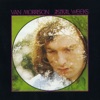
1968
Van Morrison, Astral Weeks
The Belfast singer, recorded in New York with jazz players, conjuring memories of home in improvised song.
-

1971
Alan Stivell, Renaissance of the Celtic Harp
The Breton musician who revived the Celtic harp, linking Breton, Irish and Scottish melodies.
-

1972
Christy Moore, Prosperous
Christy Moore recorded this at his sister’s house in the village of Prosperous, Co. Kildare, with Dónal Lunny, Andy Irvine and Liam O’Flynn — the sessions that brought the four together as Planxty.
-

1973
Planxty, Planxty
The debut by Christy Moore and friends, whose line-up with bouzouki led the Irish folk revival.
-

1973
Horslips, The Táin
Horslips’ second album and first concept record, retelling the Ulster Cycle epic of the Cattle Raid of Cooley: traditional melodies on electric guitars, with “Dearg Doom,” built on an old pipe march, as its classic.
-

1975
The Bothy Band, 1975
Pipes, fiddle and flute racing through reels and jigs — one of the defining Irish bands of the 1970s.
-

1976
Thin Lizzy, Jailbreak
The sixth album by Thin Lizzy, the Dublin band fronted by Phil Lynott, recorded at Ramport Studios in London. “The Boys Are Back in Town” reached No. 12 in the US and gave them their American breakthrough.
-

1983
Clannad, Magical Ring
A family band from Donegal whose Irish-language songs and ethereal sound brought Celtic music to new listeners.
-

1987
U2, The Joshua Tree
The Dublin band’s songs of fascination with and disillusion in America brought them worldwide success.
-

1987
Runrig, The Cutter and the Clan
Formed on the Isle of Skye in 1973, Runrig first released this on their own Ridge label; it includes a song in Gaelic. Reissued after they signed to Chrysalis, it carried them to audiences across Britain and Europe.
-

1988
Enya, Watermark
Enya’s second album, produced by Nicky Ryan with lyrics by Roma Ryan, begun in a tiny Dublin studio and finished in London. Its many-layered voices — and the UK No. 1 “Orinoco Flow” — made her a worldwide name.
-

1989
Capercaillie, Sidewaulk
A band from the west of Scotland setting Scottish Gaelic song to contemporary rhythm.
-

1990
Sinéad O’Connor, I Do Not Want What I Haven’t Got
Dublin’s Sinéad O’Connor, known worldwide for Prince’s “Nothing Compares 2 U,” also set an old Irish poem to music here.
-

1993
Altan, Island Angel
Altan, centred on Donegal tradition, with Mairéad Ní Mhaonaigh’s fiddle and voice and four songs in Irish. It was the last album with founding member Frankie Kennedy, who died the following year.
-

1996
Carlos Núñez, Brotherhood of Stars (A Irmandade das Estrelas)
Galician gaita (bagpipe) player Carlos Núñez’s debut, co-produced with The Chieftains’ Paddy Moloney and Ry Cooder and featuring more than 50 musicians. It sold 100,000 copies in Spain, an unheard-of figure for Celtic music there.
-

1997
Iarla Ó Lionáird, The Seven Steps to Mercy
The solo debut of sean-nós singer Iarla Ó Lionáird from Cúil Aodha in Irish-speaking Co. Cork. Produced by Michael Brook, it sets traditional and new songs in drones and field recordings, and includes a 1978 recording of him singing at fourteen.
-
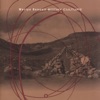
1997
Martyn Bennett, Bothy Culture
The second album by Scottish piper and composer Martyn Bennett, fusing traditional music with techno and dance beats; he composed, played, recorded and mixed it all himself over six months. Released on Rykodisc.
-

1998
Boards of Canada, Music Has the Right to Children
The debut by Scottish brothers Boards of Canada, made at Hexagon Sun, their own studio in the Pentland Hills, and released by Warp and Skam. Home of “Roygbiv,” it ranked No. 35 in Pitchfork’s list of the best albums of the 1990s.
-

2000
Super Furry Animals, Mwng
Sung entirely in Welsh, released on Super Furry Animals’ own label after the collapse of Creation, Mwng reached No. 11 — the first Welsh-language album to enter the UK Top 20.
-

2002
Damien Rice, O
Irish singer Damien Rice’s debut: after abandoned sessions in London, he recorded at his Dublin flat with a small circle including Lisa Hannigan. The hushed acoustic songs found a wide audience — two million copies sold, according to Hot Press.
-

2007
Julie Fowlis, Cuilidh
The second album by Julie Fowlis from North Uist: songs from her home island sung in Scottish Gaelic, with her husband Éamon Doorley on bouzouki. It won album of the year at the Scots Trad Music Awards.
-

2014
The Gloaming, The Gloaming
An Irish-American quintet setting sean-nós singing and fiddle inside the stillness of piano.
-

2014
Young Fathers, Dead
The debut album by Edinburgh hip-hop trio Young Fathers. It had sold just 2,386 copies in the UK when it beat favourite FKA twigs, Damon Albarn and others to the 2014 Mercury Prize.
-

2018
Gwenno, Le Kov
After winning the Welsh Music Prize with her debut, Gwenno sang her second album entirely in Cornish, as a record of a living language. The Cornish Language Board credited it with boosting the number of people taking Cornish exams in 2018.
-

2018
Lisa O'Neill, Heard a Long Gone Song
Irish singer Lisa O’Neill’s album for Rough Trade’s traditional imprint River Lea, mixing old songs and her own — opening with an unaccompanied “The Galway Shawl,” the song Margaret Barry made famous. Shortlisted for the Choice Music Prize.
-

2023
Lankum, False Lankum
A Dublin group wrapping old ballads in heavy, droning layers of sound, bringing out the darkness and depth of traditional song.
-

2023
CMAT, Crazymad, For Me
Dublin singer CMAT, whose debut won the Choice Music Prize in 2023, followed it with this three-part concept album. It entered the Irish chart at No. 1 and was shortlisted for the Choice Prize in its turn.
-

2024
Fontaines D.C., Romance
The fourth album by a band formed in Dublin, moving out from post-punk into a wider world of sound.
-

2024
Kneecap, Fine Art
Belfast trio Kneecap rap in Irish, stirring debate over language and politics.
-

2025
CMAT, EURO-COUNTRY
Irish singer CMAT’s album filters country through orchestral scale and a modern pop sensibility. The title track looks back on the Celtic Tiger boom and its crash, and other songs take on Irish identity, economic precarity, grief and online body-shaming. It was shortlisted for the 2025 Mercury Prize.
-

2025
Brìghde Chaimbeul, Sunwise
Smallpipes player Brìghde Chaimbeul’s third album, on Glitterbeat’s tak:til imprint: a largely solo song cycle about winter that leans on the pipes’ drones with a minimalist, trance-like patience, with Colin Stetson in a smaller role.